Construction Technology Card: Snow and Ice Removal from Asbestos-Cement Sheet Roofs and Flexible Roofing Materials
Materials
- Special anti-icing compounds
- Light-colored paint coatings with enhanced water-repellent properties
- Sheet steel (for manufacturing funnel covers/inserts)
Equipment
- Wooden shovels
- Plastic shovels
- Mobile stepladders
- Ladders (for low-rise buildings)
- Suspended scaffolds (gondolas) (for multi-story buildings)
- Telescopic platforms (truck-mounted aerial work platforms)
- Fire ladders (as a means of access)
- Personal protective equipment (PPE) (safety harnesses, safety ropes, non-slip footwear)
1. Scope of Application and General Provisions
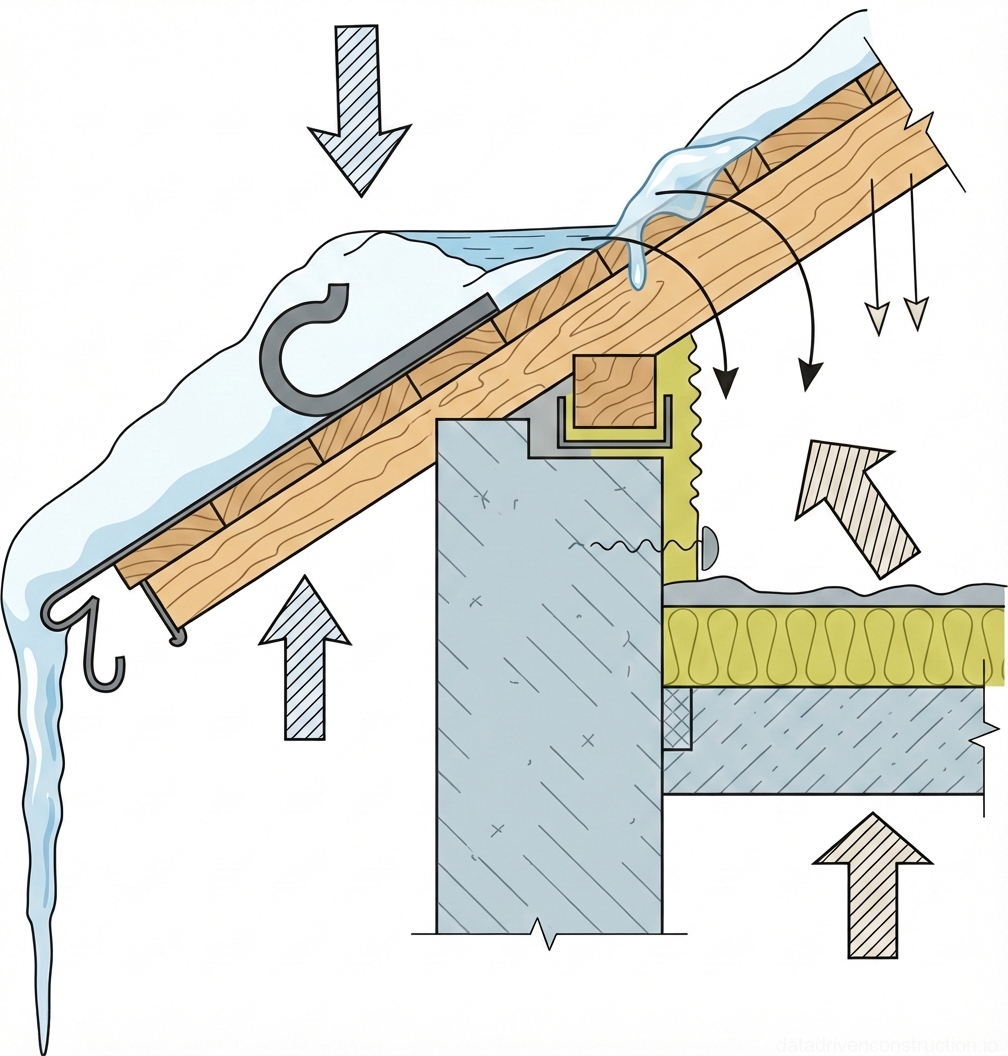
This Construction Technology Card covers procedures for clearing snow and ice from building roofs made of asbestos-cement sheets and flexible roll roofing materials. Ice formation and snow melting processes, caused by heat gain from underlying premises or exposure to solar radiation, significantly accelerate the wear and deterioration of roofing structures.
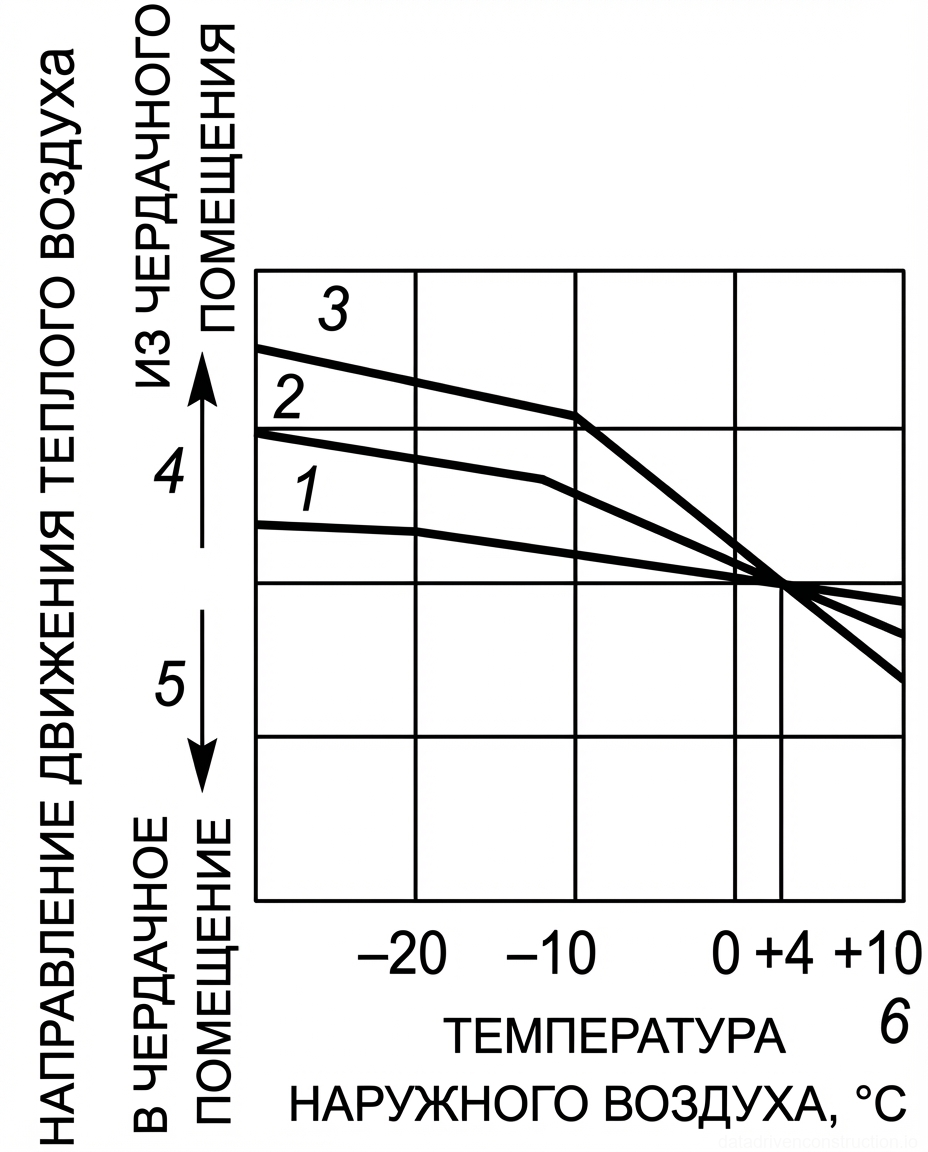
Significant heat gain from the attic space leads to snowmelt on the roof covering, while the meltwater freezes on roof eaves, in gutters, and in roof drains where the temperature drops below zero. The resulting ice buildup obstructs the drainage of meltwater, causing a backflow of moisture that can lead to capillary wicking through the joints of the roof covering and leaks into the attic, and subsequently into living spaces. Snowmelt also occurs at positive ambient temperatures and under the influence of solar radiation.
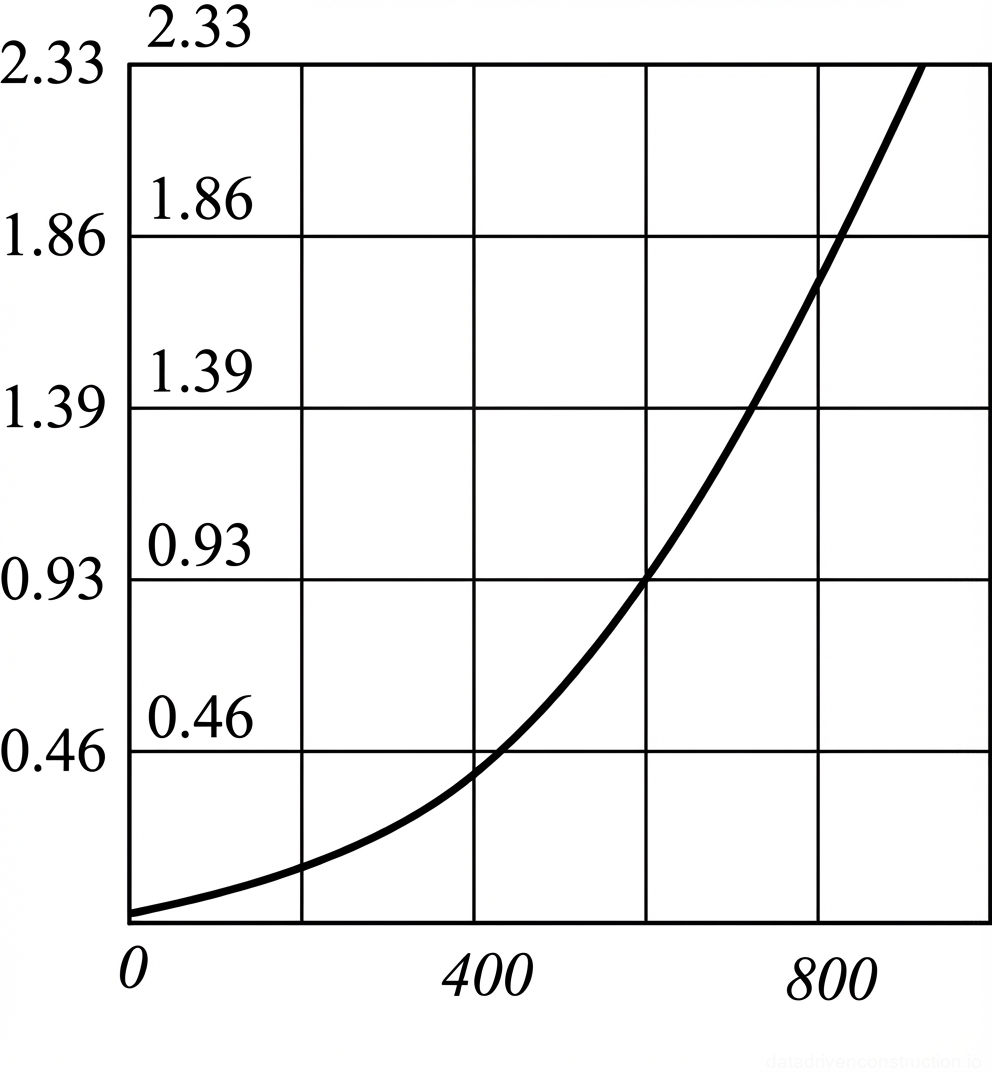
Effective measures to prevent snowmelt include additional insulation of the attic floor to eliminate heat gain into the attic space. It should be noted that the thermal conductivity of snow changes significantly during compaction, wetting, and freezing. To reduce the intensity of ice formation during periods of solar radiation-induced melting and temperature fluctuations around zero, intensive ventilation of the attic space is recommended, although its effectiveness may be limited during autumn-winter and spring periods. During building operation, attic ventilation openings must always remain open for aeration, free from snow blockage, and not flooded with water. The most vulnerable areas of roofs are the junctions with parapets, shafts, pipelines, flues, and antenna masts.
2. Work Procedures and Execution Regulations
Clearing roofs of snow and ice is part of regular building maintenance. Flexible roofs are generally not cleared of snow, with the exception of gutters, eaves on pitched roofs with external drainage, as well as snow overhangs and ice from balconies and canopies. Low-sloped reinforced concrete roofs with internal drainage are only cleared of snow if leaks occur in specific areas.
Roofs with external drainage must be periodically cleared of snow, preventing its accumulation to a layer exceeding 30 cm. During thaws, snow should be cleared even with a thinner layer. Roof clearing work must be performed using wooden or plastic shovels to avoid damaging the roof covering, eaves, gutters, and roof drains. Any discovered damage must be immediately rectified.
On roofs with a pitch exceeding 45° and free drainage (e.g., tile, shingle roofs), snow is only cleared from valleys, above cornices, and in other areas of accumulation. When clearing snow from the roof, care must be taken to protect projecting building elements, advertising structures, electrical wires, television antennas, as well as greenery and landscaping elements. Snow removal and ice clearance from wall gutters, valleys, channels, and roof drains during thaws require special attention, as untimely clearing of these areas can lead to leaks and disruption of normal building operation.
- 1. Regular clearing of roofs with external drainage: prevent snow accumulation exceeding 30 cm; during thaws, clear immediately, regardless of thickness.
- 2. Perform clearing using wooden or plastic shovels. The use of steel shovels, scrapers, and crowbars for ice removal is strictly prohibited.
- 3. When clearing, leave a snow layer of at least 5 cm thick to protect the roof covering from damage. A thin layer of ice, with the exception of eaves, is also not removed.
- 4. On roof eaves where ice buildup and icicles form, perform complete clearance.
- 5. Clear the roof simultaneously and uniformly from all its slopes, starting from the eaves towards the ridge, to prevent unilateral overloading of load-bearing structures.
- 6. Remove icicles and ice buildup from low-rise buildings using ladders; for multi-story buildings, use suspended scaffolds (gondolas), telescopic platforms, truck-mounted aerial work platforms, or fire ladders.
- 7. For asbestos-cement roofs, perform clearing from mobile stepladders. Walking on such roofs is prohibited. Only loose snow should be swept.
- 8. Do not clear snow from low-sloped reinforced concrete roofs with internal drainage, except in cases of leaks in specific areas.
- 9. It is prohibited to dump snow, ice, and debris into roof drains and downspouts.
- 10. Immediately rectify any ventilation opening malfunctions discovered during inspections. Regularly clear ventilation openings of debris.
- 11. For dark roofs, it is recommended to apply light-colored paint coatings with enhanced water-repellent properties.
- 12. For pitched steel roofs, it is recommended to install channels covering the drains, and to coat roofs (especially eaves) and gutters with special anti-icing compounds.
- 13. To prevent snow accumulation in external downspout funnels, it is recommended to cover them for winter with special sheet steel funnel covers/inserts. These funnel covers/inserts must be removed when sustained positive ambient temperatures occur.
3. Personnel Requirements and Work Safety
Roof snow and ice removal work is classified as highly hazardous work performed at height and requires strict adherence to safety regulations. This work must be documented with a written work permit, which specifies safety measures, names of performers, and their personal signatures. Only persons aged 18 or older who have undergone an annual medical examination, are certified for work at height, have completed mandatory training in safe work methods, and possess the relevant certificate are permitted to perform such work. Recertification of knowledge must be conducted at least once every 12 months.
Regular roof clearing is carried out by specially formed teams from the contractor organization operating the buildings. Work is performed under the direct supervision of a foreman or superintendent, who bear personal responsibility for its safety. In the event of heavy snowfalls, general laborers, janitors, or house staff may be engaged for the work, provided they consent, undergo training and production safety briefings, and possess medical clearance for work at height. All personnel working on the roof must be provided with non-slip (rubber, felted) footwear.
Before starting work, the supervisor must conduct an additional safety briefing on safe work methods, considering the specific conditions of the particular site, and verify the team's readiness (physical condition, workwear, personal protective equipment and fall protection, tool serviceability). A technical inspection of the parapet railing, the secure fastening of safety ropes, ladders, downspouts, drains, and their fixings, as well as projecting parts on building facades, is also mandatory. Should any malfunctions be discovered, measures must be taken to rectify them before work commences.
- 1. Pedestrian safety: The snow-dropping area must be cordoned off to the width of potential snow fall. Sidewalks and, if necessary, the roadway must be cleared of vehicles. Sentries must be posted outside the barrier, no more than 1 m from it. All doorways within the snow-dropping zone must be closed.
- 2. Use of PPE: Regardless of roof pitch, all work must be performed with mandatory use of tested safety harnesses and a strong safety rope securely fastened to rafters or special anchor points.
- 3. Work timing: Roof clearing is primarily conducted during daylight hours. If work is required during nighttime, the work area must be well-lit.
- 4. Protection of utilities and vegetation: When clearing snow from the roof, ensure the protection of electrical and telephone wires, antennas, advertising structures, and vegetation.
- 5. Prohibition of contact with electrical equipment: Workers on the roof are strictly prohibited from touching television antennas, radio masts, illuminated advertisements, and other installations capable of causing electric shock.
- 6. Post-clearance inspection: After completing roof snow and ice removal work, its condition must be checked, and any identified deficiencies must be rectified.