CONSTRUCTION TECHNOLOGY CARD
Каменные работы

Construction Technology Card: Erection of External Load-Bearing Walls using Autoclaved Aerated Concrete Blocks

This construction technology card regulates the complex of organizational and technological processes for the high-quality masonry of external walls made of autoclaved aerated concrete blocks. The document establishes strict engineering requirements for geodetic control, mechanization, tolerances, and workspace organization in accordance with modern international building standards.
6 sections 27 figures

Materials

  • Autoclaved aerated concrete (AAC) blocks (format 600x300x200 mm, water absorption up to 25%)
  • Specialized dry adhesive mortar mix for cellular concrete (consumption rate 0.0181 t/m³)
  • Roll waterproofing material (EPP grade polymer-bitumen) for moisture cut-off
  • Coniferous sawn timber for batter board installation (board 30-40 mm)
  • Portland cement, quartz sand, and construction water (for the leveling bottom joint)

Equipment

  • Mobile boom crane with a lifting capacity of 25.0 t
  • Mobile gasoline power generator (3-phase 380/220 V, power 11 kW, weight approx. 150 kg)
  • Handheld electric mixer for heavy mortars (power from 1200 W)
  • Inventory hinged-panel scaffolding (with two deck levels: 1.15 m and 2.05 m)
  • Optical or laser level with a leveling staff
  • Four-leg wire rope sling (lifting capacity 4.0 t, length 5000 mm)
  • Endless round sling (lifting capacity 4.0 t, length 2000 mm)
  • Notched mortar carriage/trowel for adhesive mortar (tooth size 8x8 mm)
1

General Provisions and Physicochemical Properties of Materials

The technology card is developed for a standard masonry volume of 100 m³. The basic wall material is autoclaved aerated concrete (AAC) blocks of a standard format of 600x300x200 mm. This material belongs to the category of lightweight cellular concretes, formed under conditions of high pressure (up to 14 bar) and temperature (+180 °C). The high-temperature autoclave process ensures a uniform microporous structure and the specified strength characteristics of the blocks.

The component composition of the working mixture for block production is strictly regulated: Portland cement (approx. 20%), fine-fraction quartz sand (60%), quicklime (20%), and a blowing agent in the form of aluminum powder (less than 1%). During the hydration process, gas is released, forming closed pores. Due to the open porous structure of the final product, the water absorption of the blocks can reach 25% of their own volume, which requires mandatory waterproofing and subsequent exterior facade finishing.

To ensure the design output, the production cycle is calculated for a single-shift operating mode. The duration of a working shift is 10 hours with a five-day working week. The estimated time takes into account an output reduction coefficient (0.05) and an overworking coefficient (1.25). Technological breaks include preparatory and final operations with a total duration of 0.24 hours (including 10 minutes for receiving tasks and 5 minutes for tool preparation).
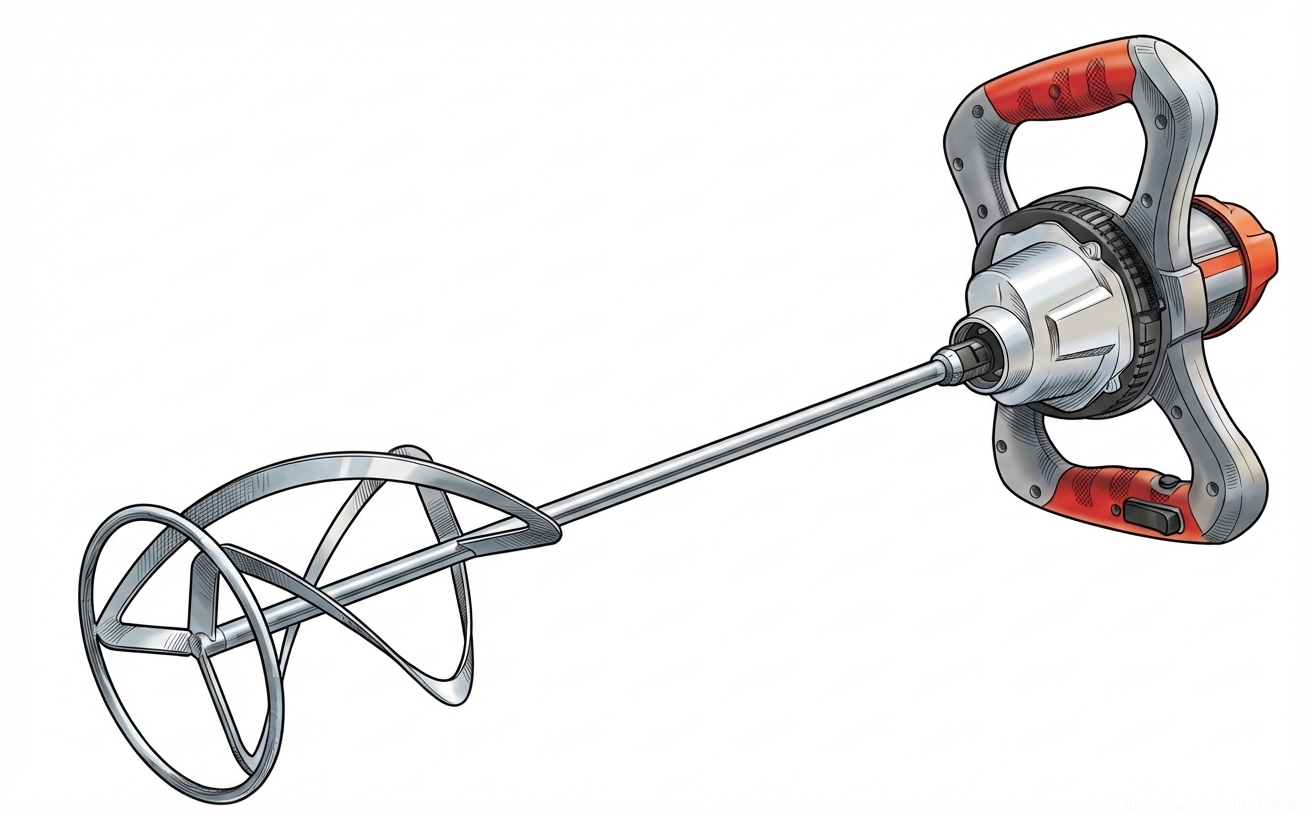
Fig. 1 — Handheld electric paddle mixer with double-handle grip and helical mixing blade
2

Workspace Organization and Geodetic Setting Out of Axes

Prior to the commencement of masonry works, comprehensive preparation of the construction site and working areas is carried out. The building is divided into work sections, and each section into masonry bays depending on the number of masons in the team. The material storage zone must ensure a supply of blocks and mortar sufficient for 2-4 hours of uninterrupted work. Pallets with blocks and mortar tubs are placed in a staggered arrangement along the work front with a spacing of no more than 4.0 m between mortar tubs.

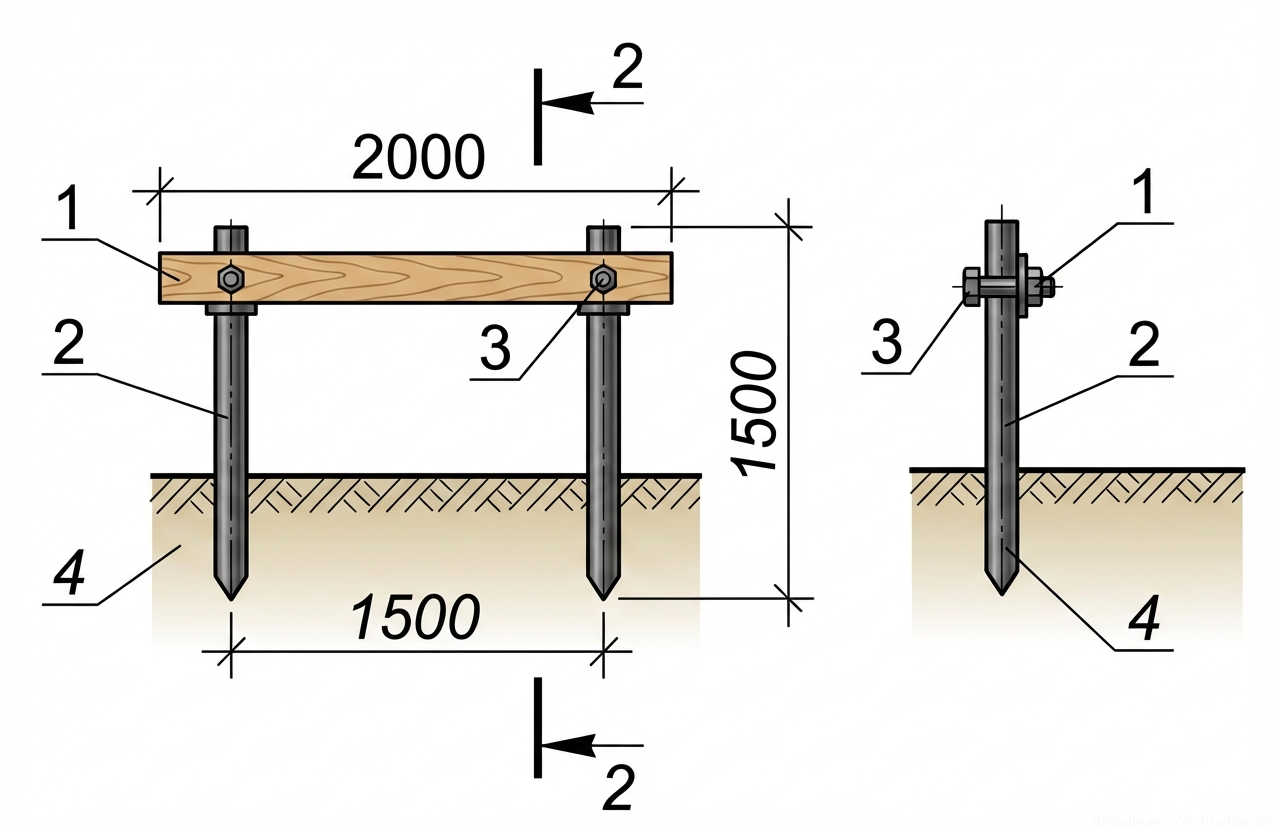
The marking of the wall erection locations is carried out by the method of alignment intersections from the main axial points of the building. To secure the axes, a robust wooden batter board is installed. The posts of the batter board are driven into the ground to a depth of 0.6-0.7 m with a spacing of 1.5 m. Boards 30-40 mm thick are fastened strictly horizontally (under the control of an optical or laser level) to the posts at a height of 0.8-0.9 m from the ground level.

Using a theodolite, the main axes are transferred to the batter board and fixed with metal markers (nails). A string stretched between the markers forms the physical axes of the walls, which are then projected onto the concrete floor slab (elevation 0.000) using plumb bobs and marked with paint. The accuracy of the geodetic setting out is subject to strict instrumental control before laying the first course of blocks.
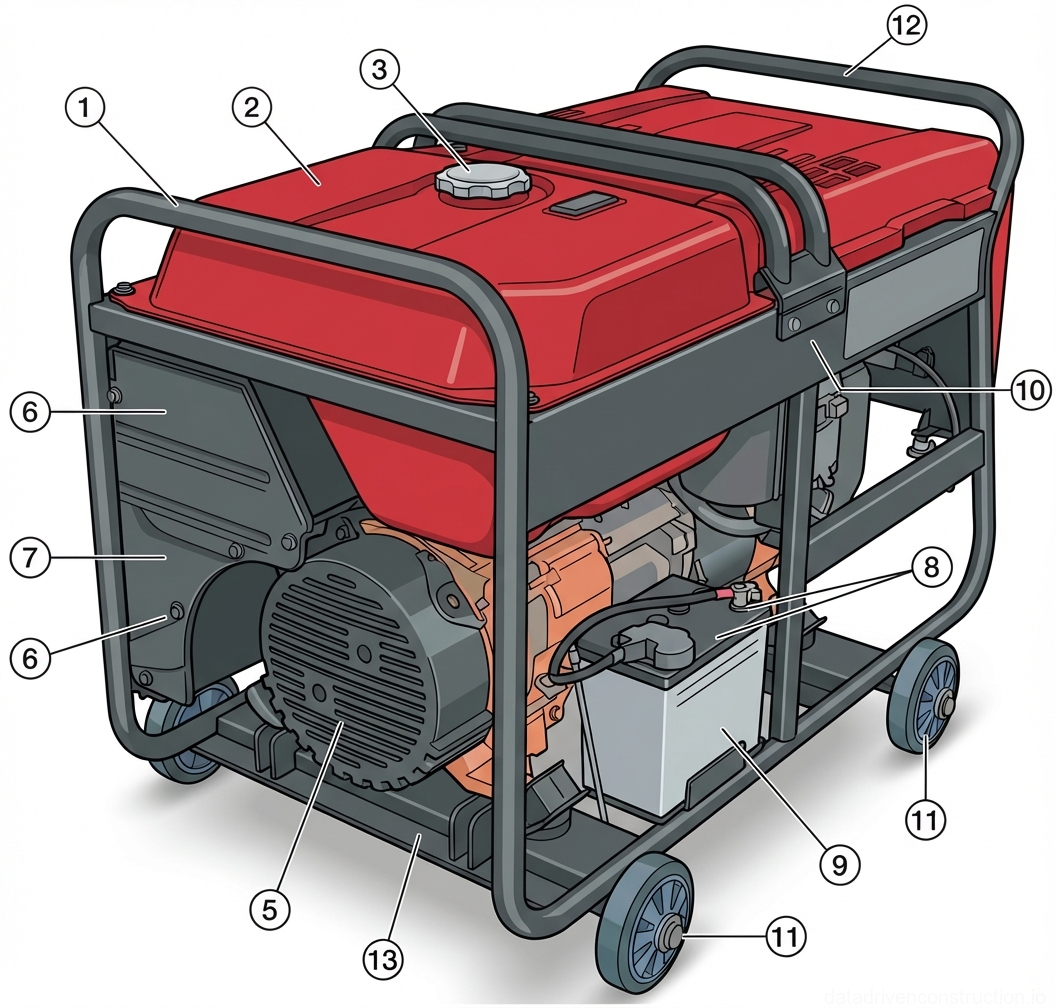
Fig. 1 — Isometric view of a portable heavy-duty generator showing frame, fuel tank, alternator, and battery components
Fig. 2 — Isometric view of a portable heavy-duty generator showing frame, fuel tank, alternator, and battery components
1Tubular steel protective frame, providing structural integrity and handles for maneuvering
2Large-capacity fuel tank, painted red, mounted at the top for gravity feed to the engine
3Fuel tank cap, threaded, for sealing and venting the fuel reservoir
5Alternator end cover, vented for heat dissipation, protecting the electrical generation components
6Fastening bolts, securing the protective side panel to the main frame
7Protective side panel/heat shield, enclosing the exhaust or engine components
8Battery terminals (positive and negative), connecting the electrical starting system
912V Starter battery, providing power for the electric ignition system
10Frame mounting bracket, connecting the upper handle/tank structure to the lower frame
11Solid mobility wheels, attached to the lower frame for easy transportation
12Rear lifting handle, integrated into the tubular steel frame
13Lower frame cross-member, providing base support and vibration isolation for the engine/alternator assembly
  1. Cleaning the working base (floor slab or foundation) from construction debris and dust.
  2. Checking the horizontality of the reinforced concrete base using a level (identifying elevation differences).
  3. Installation of a wooden batter board around the perimeter of the work section (driving posts to a depth of 0.6-0.7 m).
  4. Transferring the design axes of the building to the batter board using a theodolite.
  5. Tracing the wall axes on the floor slab using plumb bobs and marking paint.
3

Erection of Scaffolding and Small Mechanization Equipment

The wall masonry is divided vertically into tiers with a height of no more than 1.20 m. The construction of the first tier is carried out directly from the floor slab. For the masonry of subsequent tiers, specialized inventory hinged-panel scaffolds are used, consisting of welded triangular metal support trusses and a sturdy wooden deck with toe boards.

When erecting the second tier (above 1.2 m from the floor slab), the scaffolds are set to the lower position, where the folding supports are folded in the central part, providing a working deck height of 1.15 m. To transition to the third tier (above 2.4 m), the trusses are disconnected in the center. When lifting the scaffolds with a crane, the folding triangular supports straighten under their own weight. After rigid fixation of the supports with shackle brackets, the deck height increases to 2.05 m.

The installation and relocation of the scaffolds are carried out by a mobile boom crane with a lifting capacity of 25.0 t. To prevent deformation of the fresh masonry, a technological gap of up to 5 cm is strictly maintained between the working deck of the scaffolds and the structure being erected. The lifting of workers to the tiers is carried out using inventory ladders with non-slip shoes, installed at an angle of 70-75° to the horizontal.
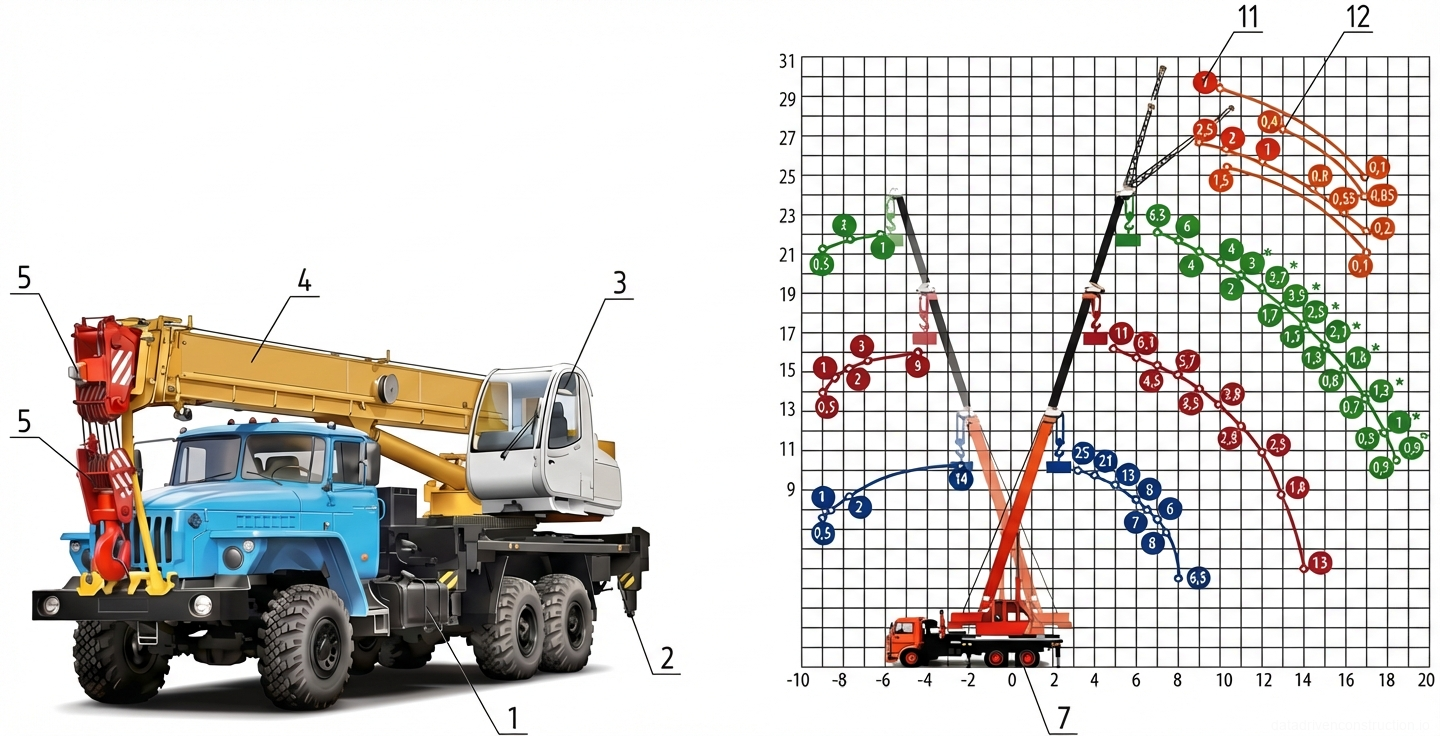
Fig. 1 — Mobile crane physical components and comprehensive load capacity chart
Fig. 3 — Mobile crane physical components and comprehensive load capacity chart
1Specialized truck chassis providing mobility and structural support for the crane assembly.
2Hydraulic outrigger jack, deployed to provide stability and level the crane during lifting operations.
3Crane operator's cabin, housing the control systems for boom operation and lifting functions.
4Telescopic boom structure, extendable to various lengths (up to 21.7m) to achieve required lifting heights and radii.
5Hook block and sheave assembly, used for attaching and hoisting the load via the wire rope system.
7Horizontal axis of the load chart representing the operating radius in meters.
11Load capacity curve for the maximum boom extension (21.7m) with a 9m jib extension, indicating safe working loads at various radii.
12Load capacity curve for the maximum boom extension (21.7m) with a 6m jib extension, indicating safe working loads at various radii.
4

Masonry Works Production Technology

To minimize heat loss and eliminate 'thermal bridges', the installation of AAC blocks is carried out exclusively using a specialized thin-bed adhesive masonry mortar (consumption rate of about 0.0181 t per 1 m³ of masonry). The standard thickness of horizontal and vertical joints for the thin-bed adhesive method is strictly 1-3 mm. The use of traditional cement-sand mortar is permitted only for leveling the first course (with a joint thickness of 6-10 mm).

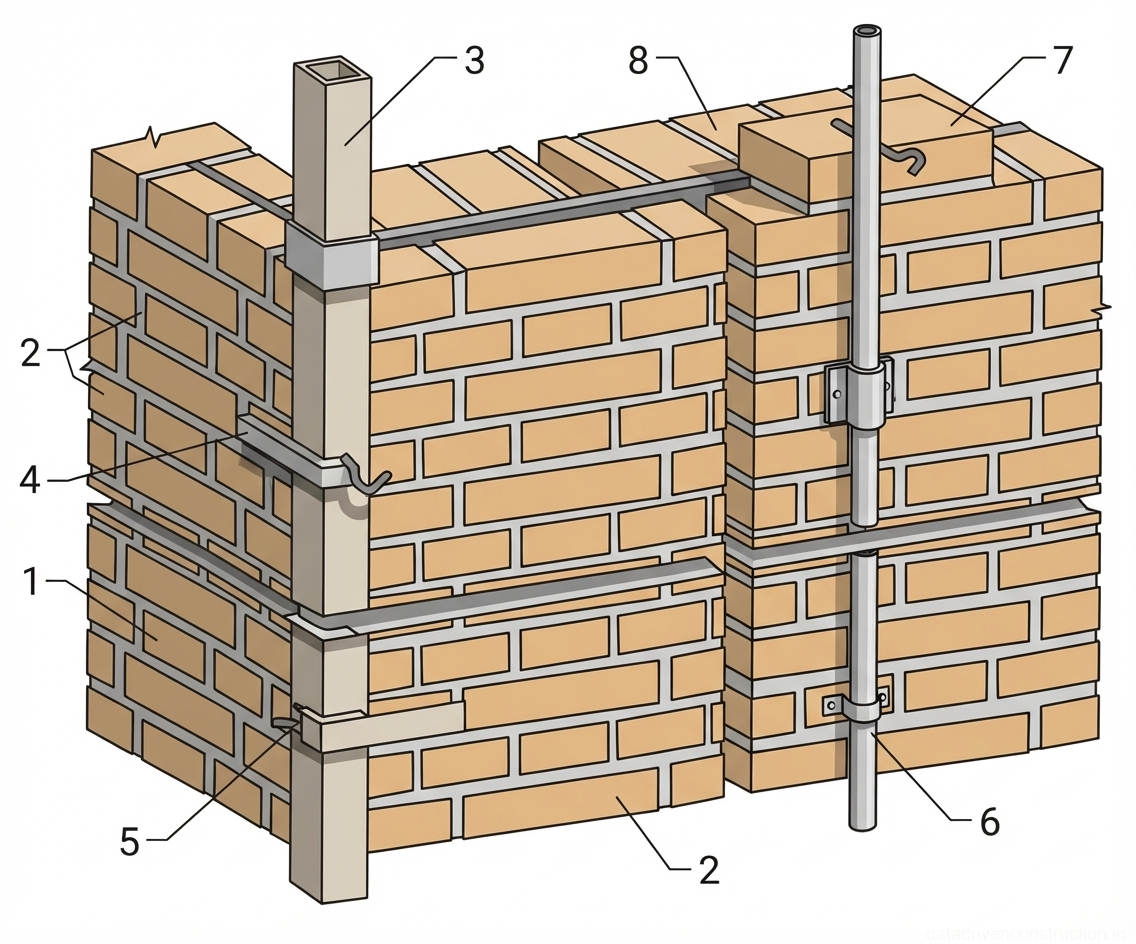
The technological process begins with the laying of horizontal waterproofing (extruded roll material) along the foundation or plinth edge. Then, a qualified mason sets the corner and intermediate gauge rods. The gauge rods are secured with clamps every 3-4 courses, and their verticality is calibrated with adjusting screws. On straight wall sections, the spacing of the gauge rods is 10-15 m.

The mortar is prepared on-site using a handheld electric mixer (power output from 1200 W). The adhesive is applied to the contact surfaces of the block and leveled with a notched trowel with a tooth size of 8x8 mm. The block is placed in its design position and seated by tapping with a rubber mallet. After the mortar sets, all irregularities and level differences between adjacent blocks are sanded with a special rasp or an electric sander.
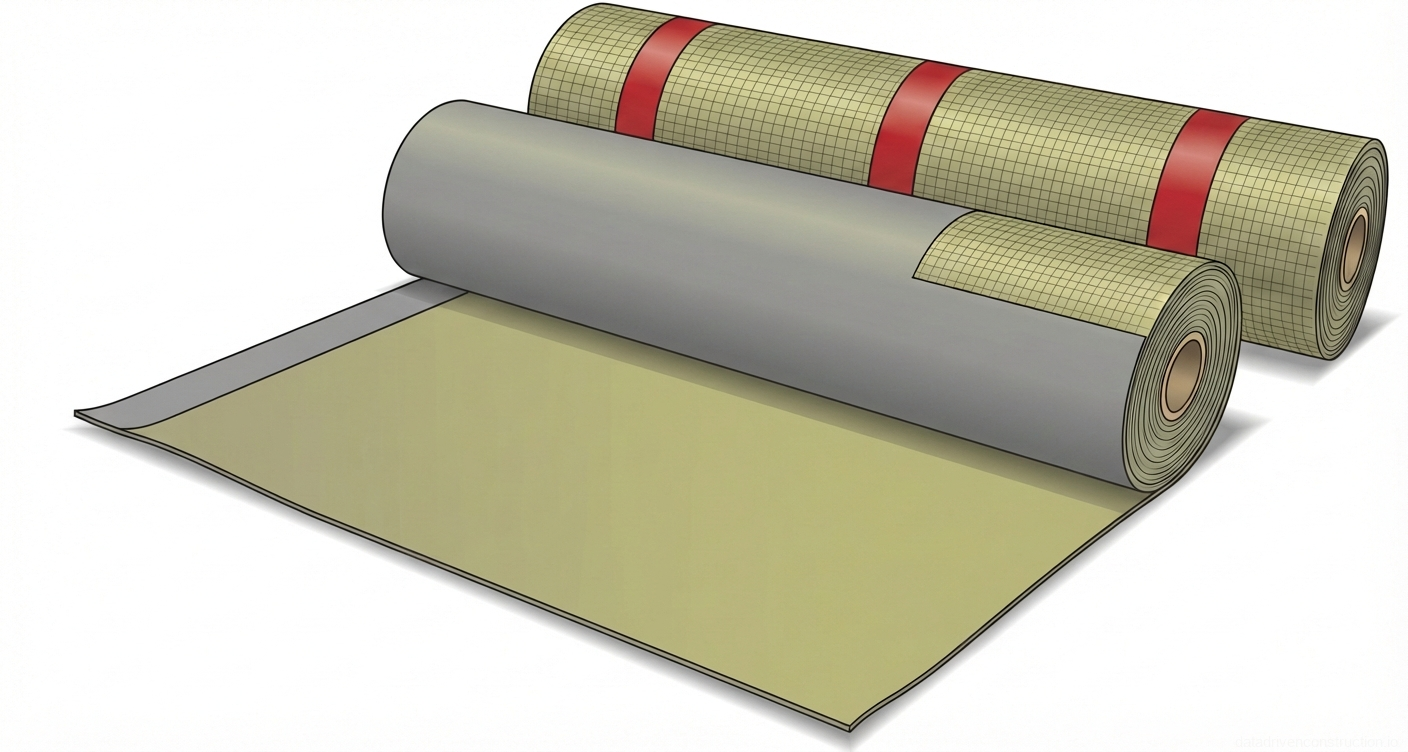
Fig. 1 — Rolls of polymer-bitumen waterproofing membrane for roofing and underground structures
Fig. 4 — Rolls of polymer-bitumen waterproofing membrane for roofing and underground structures
  1. Laying roll waterproofing on the prepared base.
  2. Installation and alignment of corner and intermediate metal gauge rods with a spacing of 10-15 m.
  3. Tensioning the mason's string line for the first course of blocks.
  4. Preparation of the adhesive mortar using an electric mixer.
  5. Application of the adhesive using a notched trowel (8x8 mm) to the horizontal and vertical faces.
  6. Placing the block, checking the level, and seating with a rubber mallet.
  7. Sanding the surface of the laid course before laying the next one.
5

Geodetic and Operational Quality Control

During the erection of the enclosing structures, continuous operational control is carried out. Permissible deviations of the masonry surfaces and corners from the vertical must not exceed 10 mm. Verticality control is performed using a plumb bob weighing at least 600 g every 0.5-0.6 m along the wall height.

Deviations in the width of window and door openings are allowed within +15 mm of the design dimensions, and deviations in the width of piers — no more than -15 mm. The horizontality of the masonry courses is checked with a spirit level and a steel rule at each tier; the maximum deviation from the horizontal must not exceed 15 mm per 10 meters of length.

Special attention is paid to controlling elevation marks. The displacement of the bottom elevation of the bearing surfaces for reinforced concrete lintels is allowed by no more than -10 mm. The thickness of the horizontal joints of the leveling cement layer is controlled by a steel ruler and must not exceed 12 mm. Upon completion of the work stage, a hidden works inspection certificate is drawn up with attached as-built drawings.
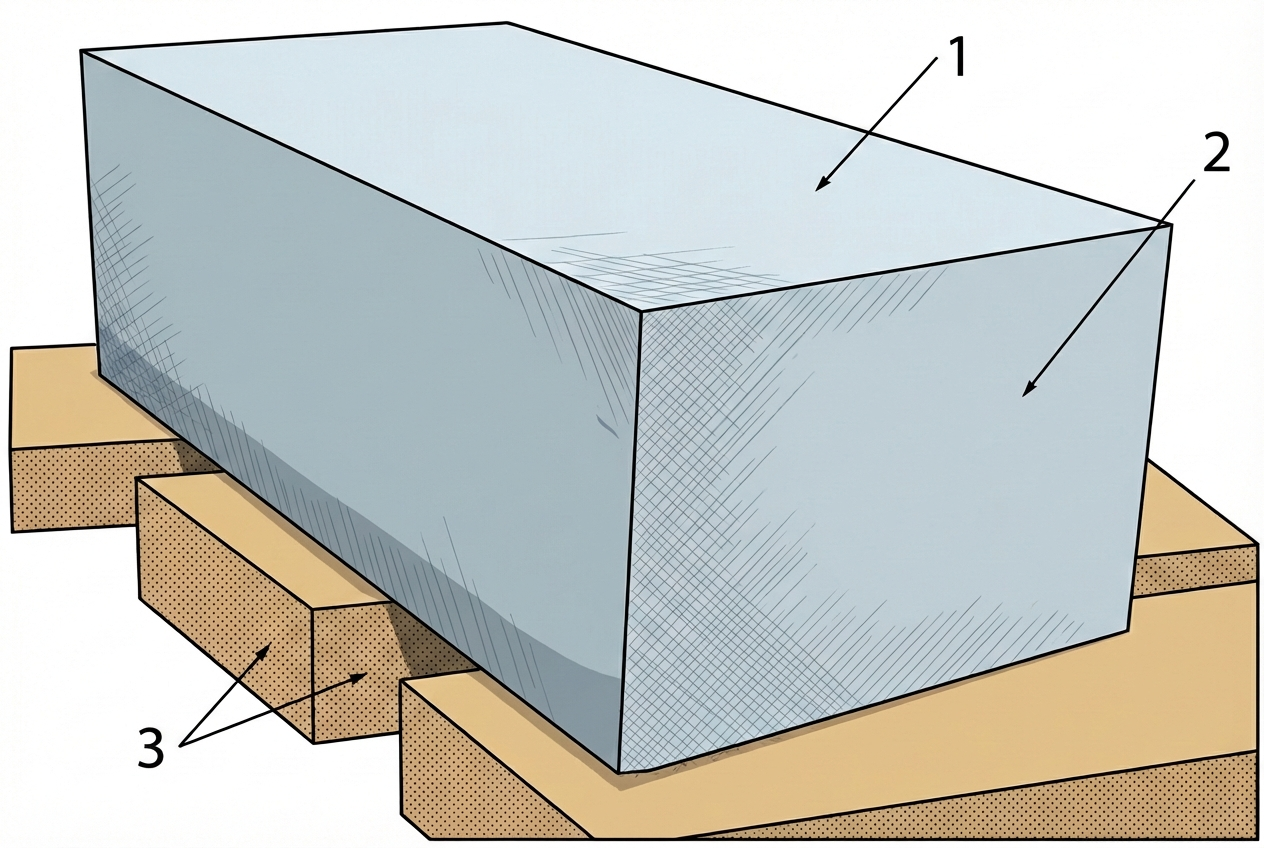
Fig. 1 — Standard cellular concrete masonry unit highlighting primary bonding faces and protective storage supports
Fig. 5 — Standard cellular concrete masonry unit highlighting primary bonding faces and protective storage supports
1Bed face (top horizontal surface) of the cellular concrete block, acting as the primary load-bearing plane designed to receive thin-bed adhesive mortar
2Header face (vertical end surface) of the masonry unit, intended for end-to-end vertical cross-joint bonding with adjacent blocks within a standard course
3Timber support bearers (dunnage) or pallet boards, typically softwood, used to elevate the porous blocks from the ground to prevent moisture ingress and physical damage during site storage
6

Occupational Health and Industrial Safety

Responsibility for the safe execution of works rests with line engineering and technical personnel (foremen, site supervisors). Before the start of each shift, the team leader must check the condition of scaffolds, lifting mechanisms, and manual power tools. The site is supplied with power from a mobile three-phase power generator (380/220 V, 11 kW); equipment connection must be carried out through residual current devices (RCDs).

The construction site and working tiers in the dark are provided with uniform artificial lighting that excludes a blinding effect on crane operators and masons. Conducting masonry works in unlit areas is strictly prohibited. The danger zones of the boom crane operation are cordoned off with warning tapes and safety signs.

All workers are provided with personal protective equipment (PPE), including hard hats, safety footwear, protective gloves, and respirators (when cutting and sanding blocks). Sanitary and welfare facilities must be deployed on the site, located strictly outside the danger zones of lifting machines, and equipped with first aid kits and primary fire extinguishing equipment.
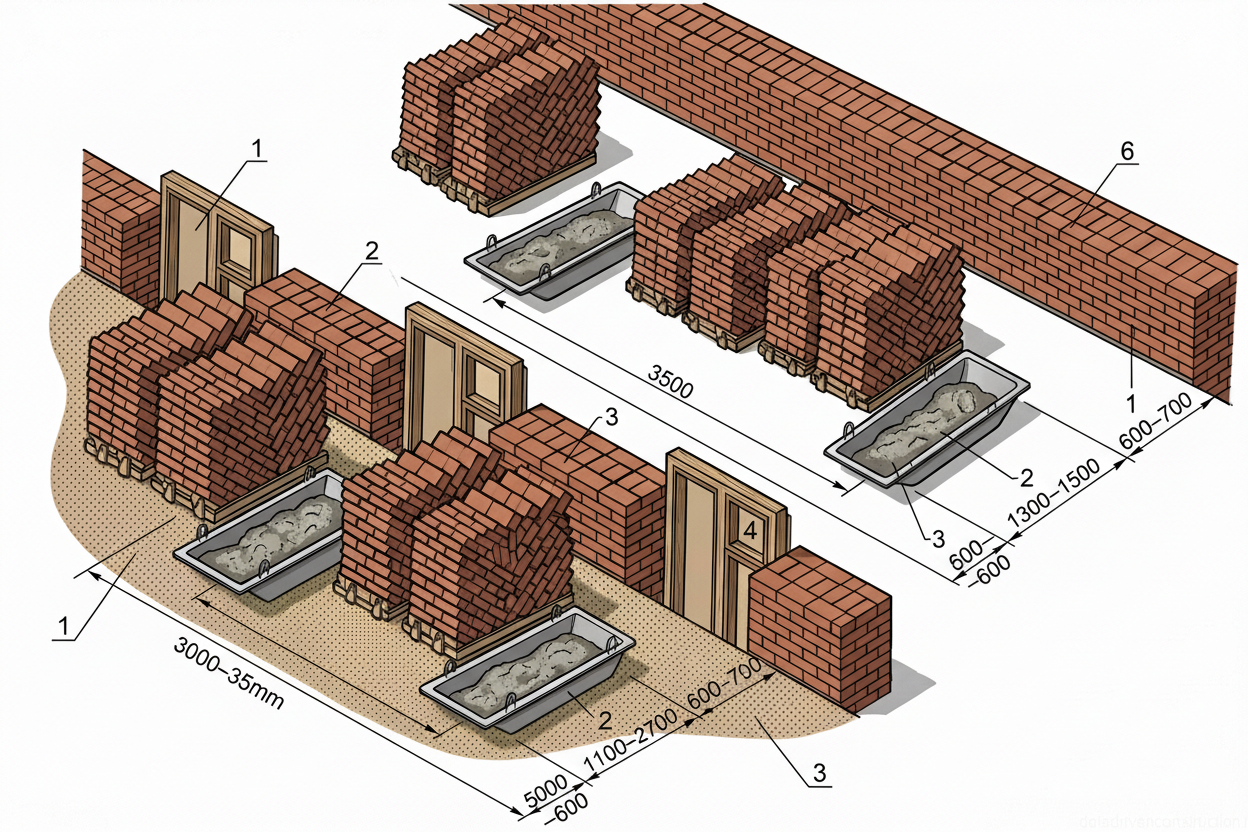
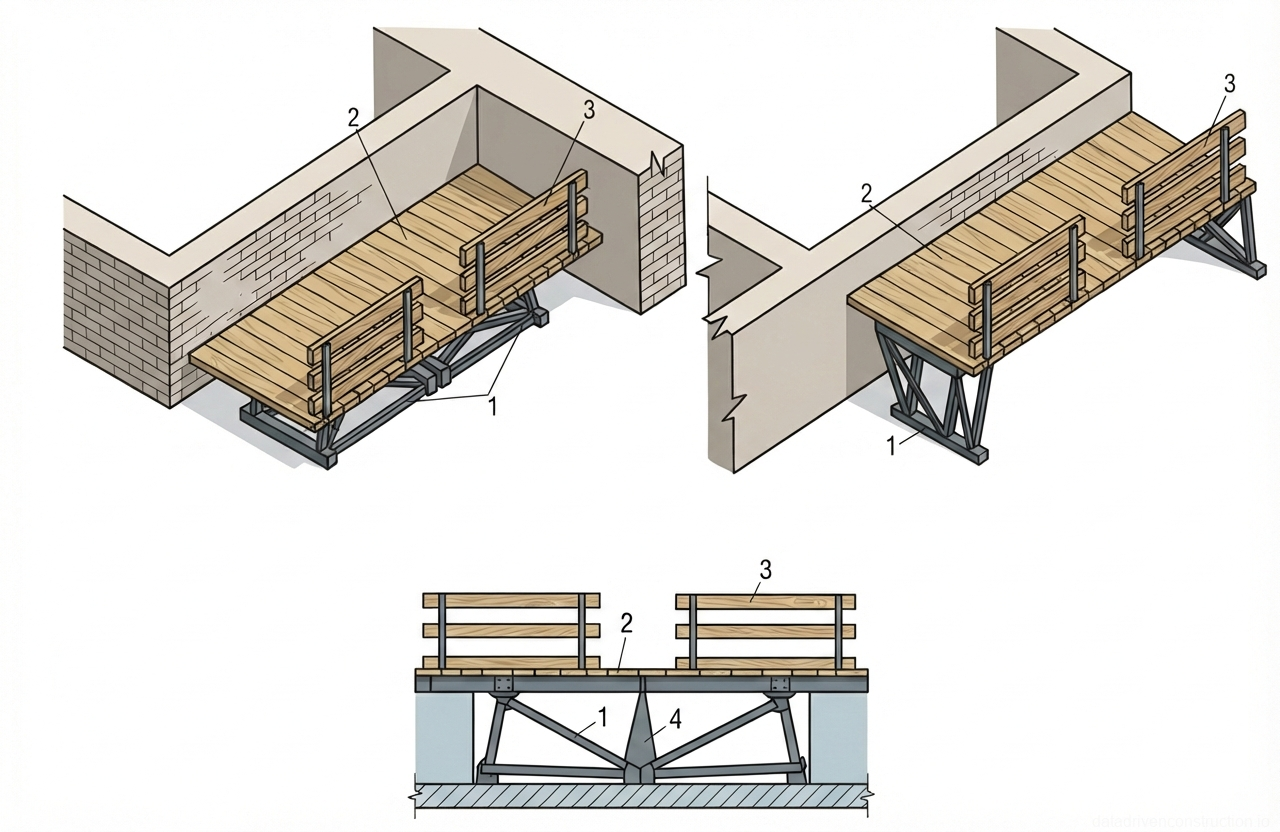
Fig. 1 — Organization of the mason's workplace during the construction of a solid brick wall and a wall with openings
Fig. 6 — Organization of the mason's workplace during the construction of a solid brick wall and a wall with openings
1Working zone for masons (width 600-700 mm) adjacent to the constructed wall
2Materials zone (width 1300-1500 mm) containing pallets of bricks and mortar tubs
3Transport/passage zone (width 500-600 mm) for the movement of workers and supply of materials
4Window/door frame installed within the masonry wall construction
5Pallets loaded with bricks, arranged parallel or perpendicular to the wall axis depending on the workspace configuration
6Mortar tubs positioned between brick pallets for easy access by masons
Fig. 1 — Configuration and structural details of adjustable scaffolding platforms for masonry work
Fig. 7 — Configuration and structural details of adjustable scaffolding platforms for masonry work
1Steel tubular supporting truss structure forming the primary load-bearing base of the scaffolding system
2Timber plank decking forming the working platform surface, providing safe access for personnel and materials
3Safety guardrail system constructed with horizontal timber boards and vertical steel supports, with a standard height of 1200mm
4Central vertical support member within the steel truss, transferring loads from the decking to the base
Fig. 1 — Elevation and section detailing a temporary surveying batter board or wooden barrier assembly
Fig. 8 — Elevation and section detailing a temporary surveying batter board or wooden barrier assembly
1Horizontal wooden board, 30x120 mm cross-section, overall length 2000 mm, serving as the primary sight rail or physical barrier
2Vertical support post, 1500 mm overall length, featuring a pointed lower tip for driven embedment into the natural soil
3Bolted fastening assembly (comprising a through-bolt, nut, and washers) rigidly securing the horizontal wooden board to the vertical supports
4Natural soil or ground subgrade into which the supporting posts are anchored
Fig. 1 — Brick masonry construction utilizing corner and intermediate vertical profiles for course alignment
Fig. 9 — Brick masonry construction utilizing corner and intermediate vertical profiles for course alignment
1Horizontal taut line (mason's string) used for aligning individual brick courses
2Standard solid clay brick used for the main wall construction
3Square section vertical corner profile (often timber or metal) serving as a guide for the external wall corner
4Adjustable metal clamp securing the vertical corner profile to the newly laid masonry
5Wooden wedge or spacer used to tighten and secure the clamp against the masonry
6Tubular metal vertical profile used as an intermediate guide on straight wall sections
7Metal anchor or bracket fixing the upper part of the tubular profile to the masonry
8Vertical plumb line or string extending downwards from the anchor bracket to ensure true verticality of the intermediate profile
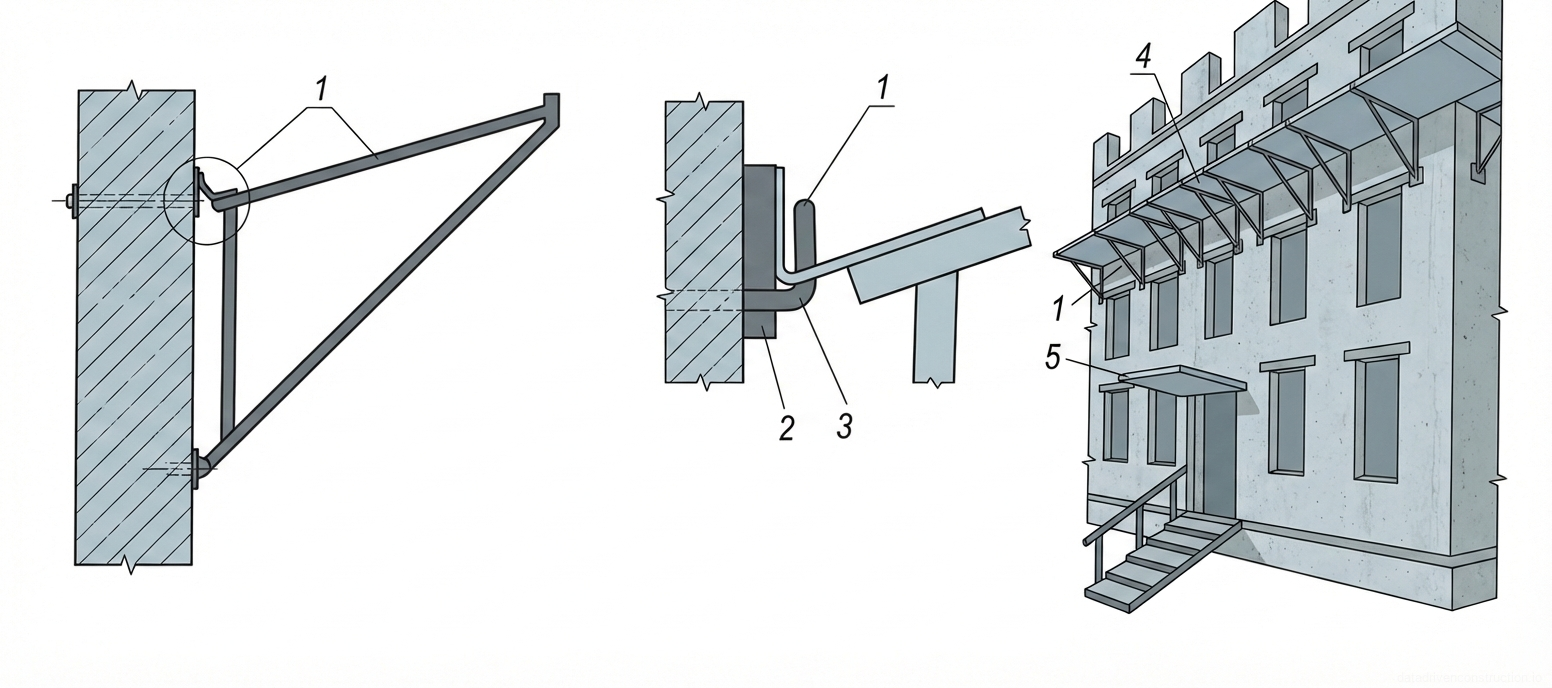
Fig. 1 — Layout and installation details of a facade protective catchment canopy with anchor bracket connections
Fig. 10 — Layout and installation details of a facade protective catchment canopy with anchor bracket connections
1Protective triangular metal bracket, structural frame supporting the catchment canopy, anchored to the facade wall
2Metal anchor plate or washer, distributes the bearing load from the through-bolt against the exterior face of the wall
3J-shaped hook or anchor bolt, connects the upper arm of the triangular bracket through the wall to the interior securing plate
4Continuous protective decking or catchment netting, laid over the series of brackets to catch falling debris
5Existing permanent entrance canopy over the building doorway, located below the temporary protective system
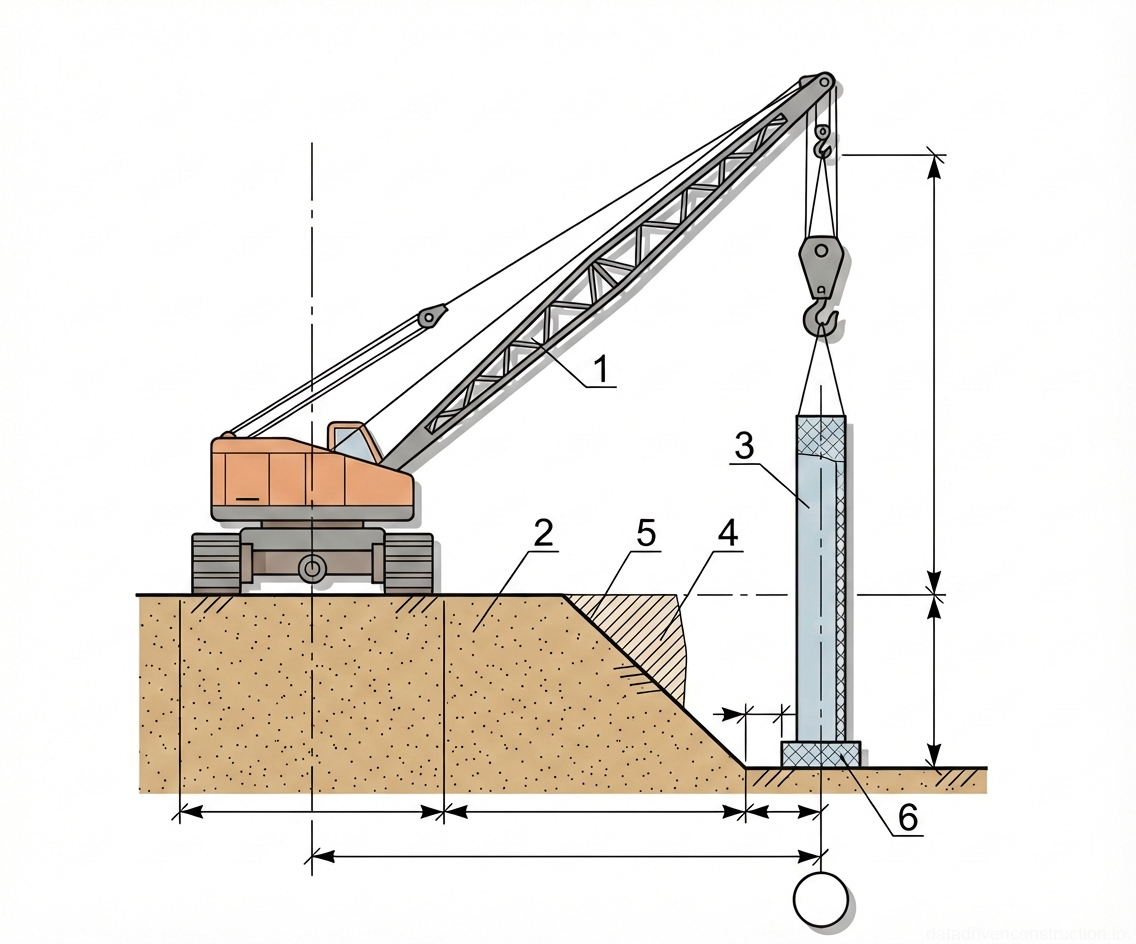
Fig. 1 — Scheme of crane positioning for the installation of foundation elements in an excavation
Fig. 11 — Scheme of crane positioning for the installation of foundation elements in an excavation
1Crawler crane boom, lattice structure, providing the necessary lifting height and reach for positioning elements
2Stable ground level, providing a solid base for the crane operation, maintaining a safe distance from the slope
3Precast reinforced concrete column being hoisted into position within the excavation
4Excavation slope, inclined at a specific ratio (1:m) to prevent soil collapse during installation works
5Prism of potential soil collapse, indicating the unstable zone near the slope edge that the crane tracks must avoid
6Foundation base or pad installed at the bottom of the excavation, ready to receive the precast column
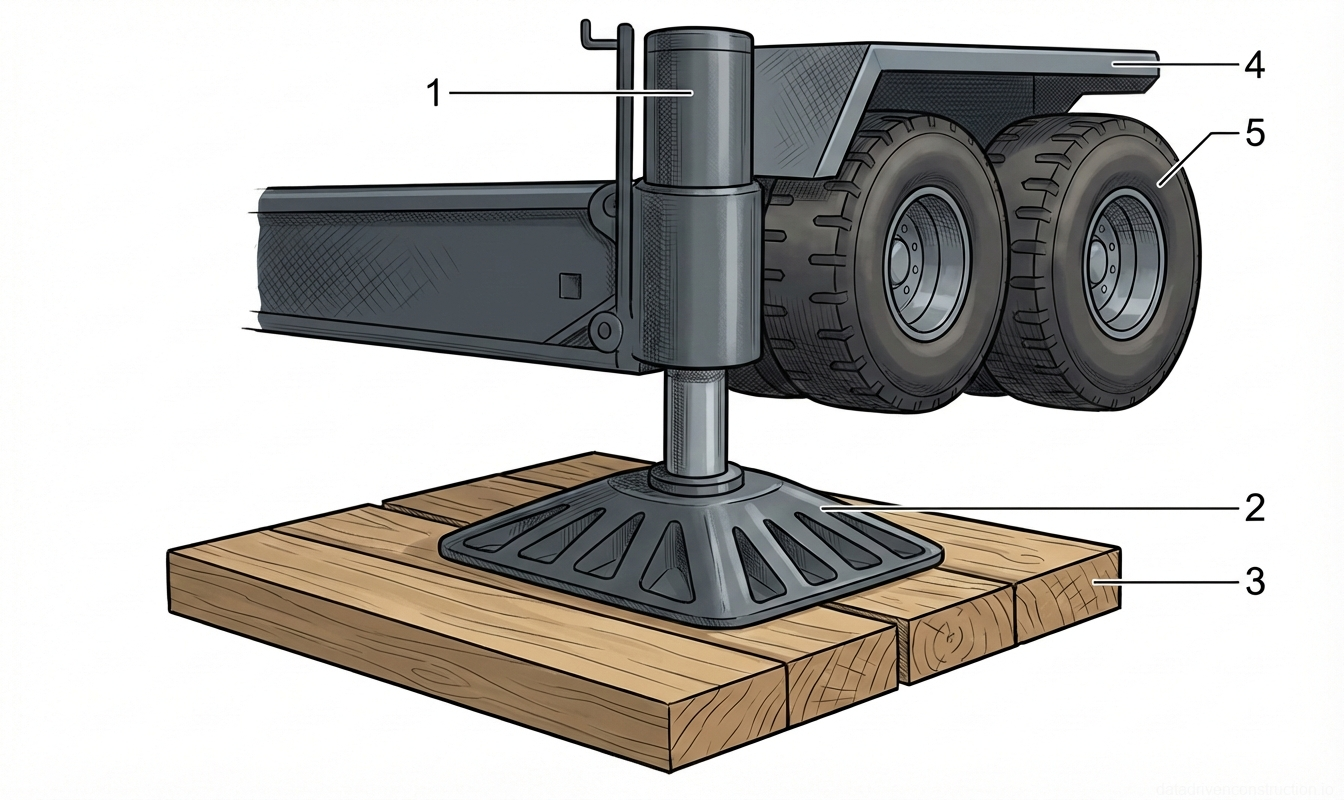
Fig. 1 — Outrigger stabilizer deployment with float pad and timber dunnage load distribution
Fig. 12 — Outrigger stabilizer deployment with float pad and timber dunnage load distribution
1Hydraulic outrigger cylinder and housing, provides vertical lifting force and stabilization for the equipment chassis
2Metal outrigger float pad with reinforced webbing, distributes the concentrated hydraulic load over a larger surface area
3Timber dunnage blocks (cribbing), arranged side-by-side to further distribute the load into the ground subgrade and prevent sinking
4Heavy equipment chassis/fender structure, structural base for the outrigger attachment
5Dual pneumatic tire assembly on the rear axle, lifted clear of the ground to transfer the machine weight to the stabilizers
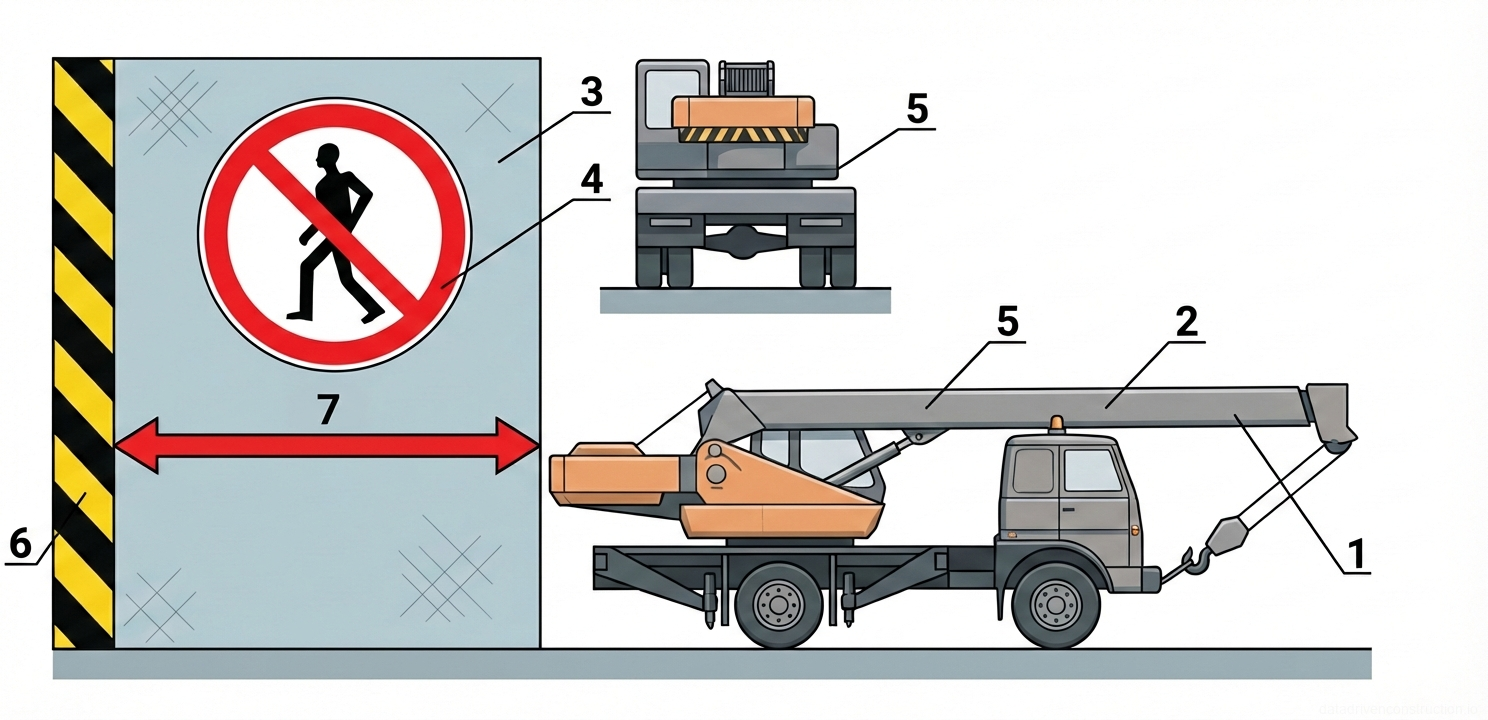
Fig. 1 — Safety clearance requirements for mobile crane operation near stationary structures
Fig. 13 — Safety clearance requirements for mobile crane operation near stationary structures
1Winch rope and hook assembly, used for lifting and lowering loads during crane operations
2Telescopic boom, extends to adjust the reach and lifting height of the crane
3Stationary structure or wall, representing an obstacle or hazard zone boundary
4Prohibition sign ('No Pedestrian Access'), indicating a restricted area for safety reasons
5Mobile crane superstructure, housing the cabin, boom base, and counterweights, shown in both side and rear views
6Hazard warning tape (yellow and black diagonal stripes), clearly marking the edge of the restricted or hazardous zone
7Minimum required safety clearance distance (not less than 1 meter) between the crane's rotating parts and the stationary structure, indicated by a red double-headed arrow
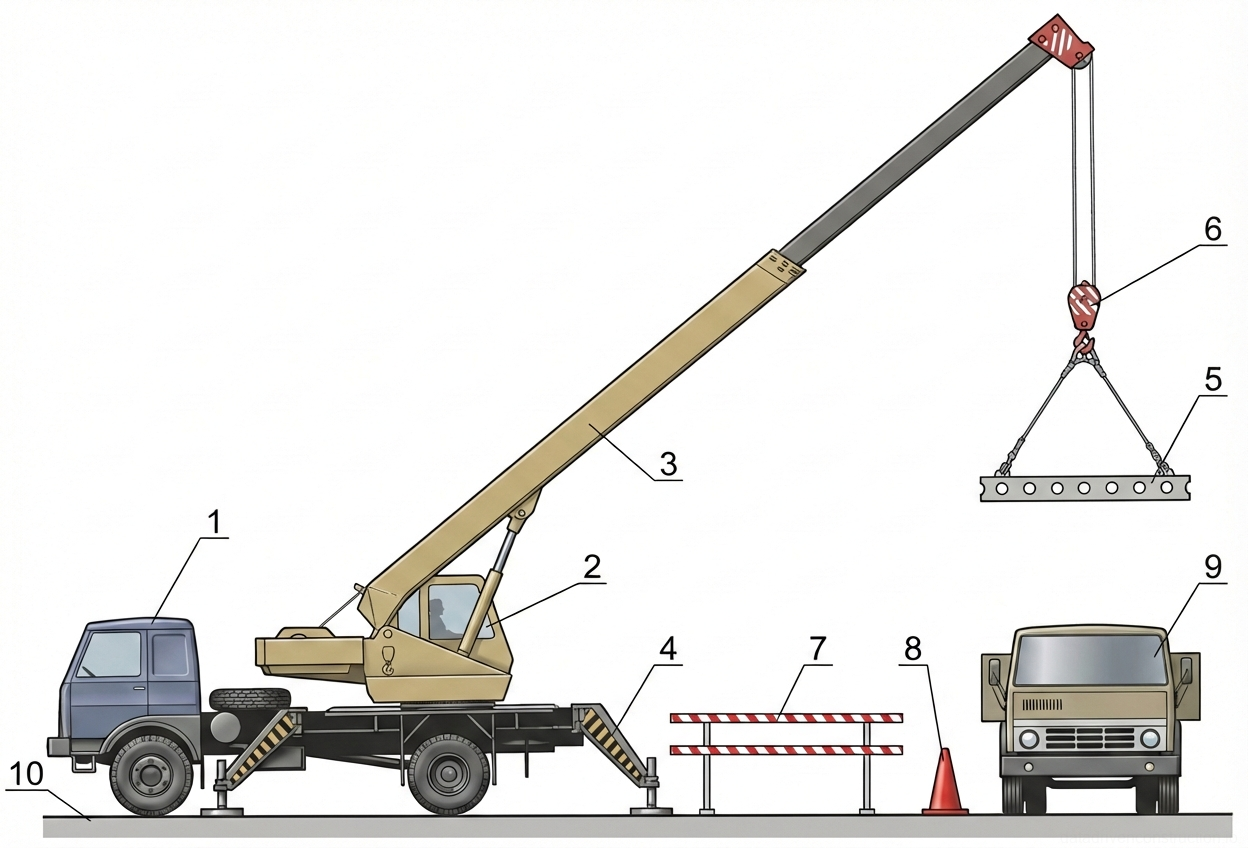
Fig. 1 — Schematic layout of mobile crane lifting operations, detailing crane components, rigging of precast concrete elements, and required safety exclusion zones
Fig. 14 — Schematic layout of mobile crane lifting operations, detailing crane components, rigging of precast concrete elements, and required safety exclusion zones
1Carrier vehicle cab, standard steel construction, houses the driver during road transit, located at the front of the mobile crane chassis
2Crane operator cab, steel frame with safety glass, houses the control panel for lifting operations, mounted on the slewing unit of the crane superstructure
3Telescopic hydraulic boom, high-tensile structural steel box-sections, extends to manipulate loads at required radii and heights
4Hydraulic outrigger assembly with ground pad, structural steel, deployed to bypass vehicle suspension and provide a stable, level load-bearing base
5Four-point wire rope lifting sling attached to a precast reinforced concrete hollow-core slab, rigging designed to evenly distribute the lifting load
6Heavy-duty crane hook block with sheave mechanism, forged steel hook, connects the hoist line to the rigging to lift the concrete element
7Temporary safety barricade, painted high-visibility steel or plastic, physically restricts unauthorized entry into the active crane lifting zone
8High-visibility warning traffic cone, molded PVC/polyurethane, demarcates the outer boundary of the restricted hazardous work area
9Delivery transport truck, standard heavy commercial flatbed vehicle, positioned safely to supply precast concrete elements to the site
10Ground bearing surface, compacted soil or paved area, must possess adequate bearing capacity to safely support maximum outrigger point loads
Fig. 1 — Standard crane hand signal for hoisting operations demonstrating signaler position and required arm movement
Fig. 15 — Standard crane hand signal for hoisting operations demonstrating signaler position and required arm movement
1Signaler/Rigger, equipped with high-visibility PPE and hard hat, maintaining visual contact with the crane operator
2Extended arm and open hand positioned with palm facing upwards to execute the hoisting signal
3Mobile hydraulic crane boom, extended and positioned to perform the lifting operation according to signaler instructions
4Suspended concrete block load, secured with rigging hardware, being hoisted vertically
5Wire rope hoist line attached to the crane hook block, maintaining tension during the lift
6Magnified view graphic illustrating the standard 'Hoist' hand signal detail
7Detail of signaler's hand, demonstrating the correct open-palm upward posture for the hoisting command
8Upward directional arrows indicating the required motion of the hand to signal vertical hoisting of the load
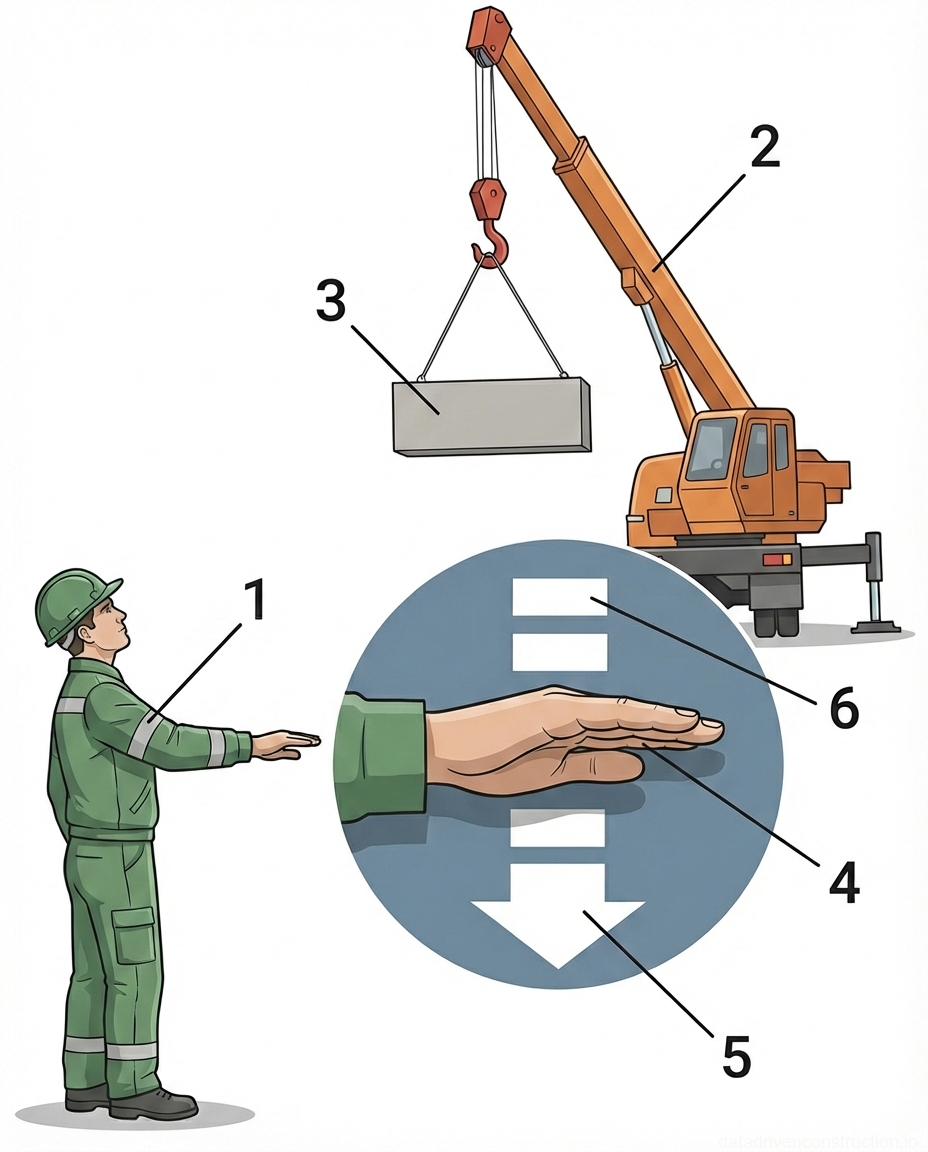
Fig. 1 — Standard crane hand signal: Lowering the load
Fig. 16 — Standard crane hand signal: Lowering the load
1Signaler/Rigger, positioned in clear view of the crane operator to provide visual guidance
2Mobile hydraulic crane, executing the lifting and lowering operations
3Suspended load (e.g., concrete block or equipment) being lowered
4Horizontal arm extension with palm facing down, the standard starting position for the 'lower' signal
5Downward arrow indicating the required direction of movement for the load
6Dashed line indicating the repeated downward motion of the hand to signal continuous lowering
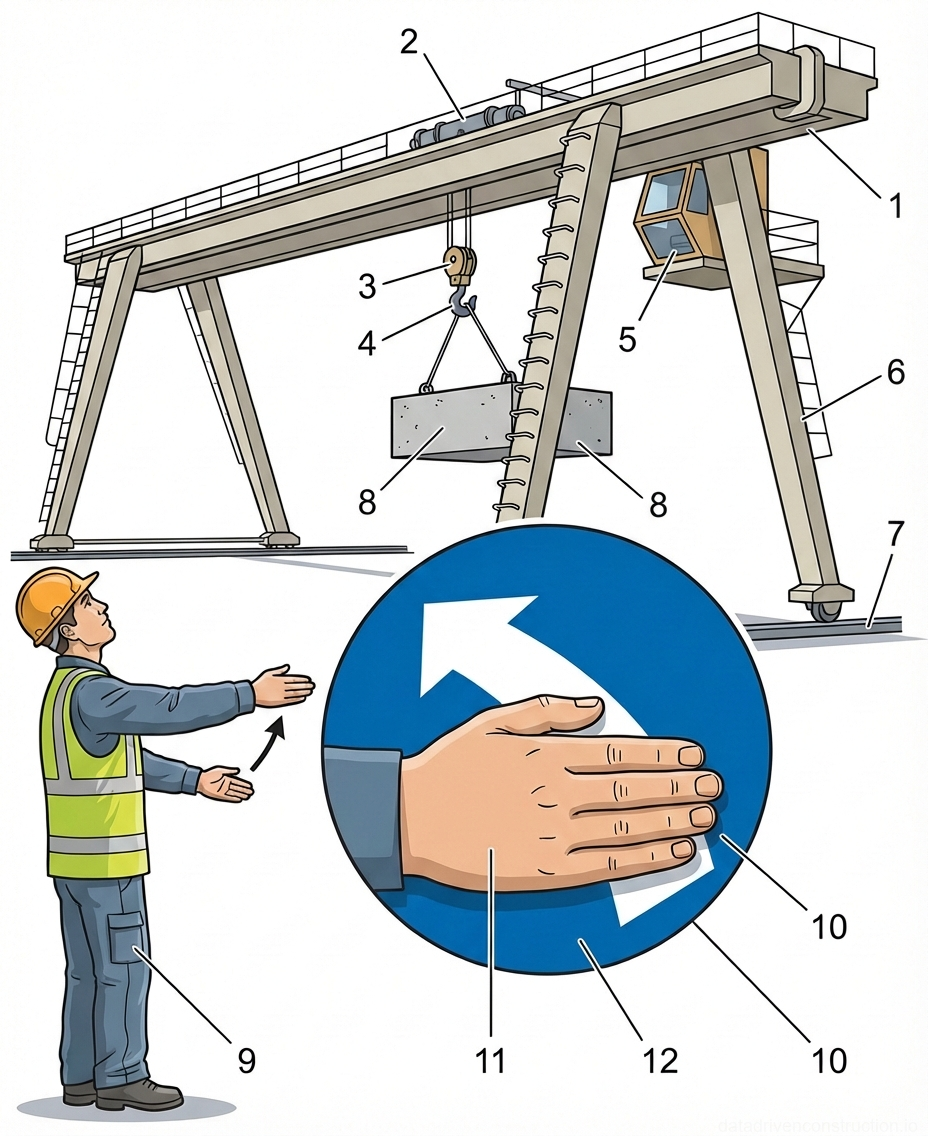
Fig. 1 — Standard hand signal for hoisting a load using a gantry crane, illustrating the roles of the signalperson and crane operator.
Fig. 17 — Standard hand signal for hoisting a load using a gantry crane, illustrating the roles of the signalperson and crane operator.
1Main girder — structural steel beam spanning the crane's width, supporting the hoist trolley and allowing lateral movement.
2Hoist trolley — mechanical unit running along the main girder, containing the motor and drum for lifting and lowering the load.
3Hook block — pulley assembly with a hook used to attach the load to the hoist rope, multiplying lifting force.
4Crane hook — heavy-duty steel lifting hook connecting the rigging slings to the hoist mechanism.
5Operator cabin — enclosed control room suspended from the crane structure, providing visibility and controls for crane operation.
6Crane leg — structural steel support column with an integrated ladder, transferring the crane's load to the travel wheels.
7Crane rail — steel track laid on a foundation, guiding the travel wheels and allowing the crane to move longitudinally.
8Suspended load — concrete or heavy material block secured by rigging slings, currently being hoisted or positioned.
9Signalperson / Rigger — trained personnel wearing high-visibility safety gear, responsible for directing crane movements using standard hand signals.
10Directional arrow — visual indicator showing the required upward motion of the hand to signal 'hoist' or 'raise'.
11Hand signal (Hoist) — arm extended horizontally, palm facing upward, moving in an upward motion to instruct the operator to lift the load.
12Signal indicator background — contrasting circular background highlighting the specific hand signal being demonstrated.
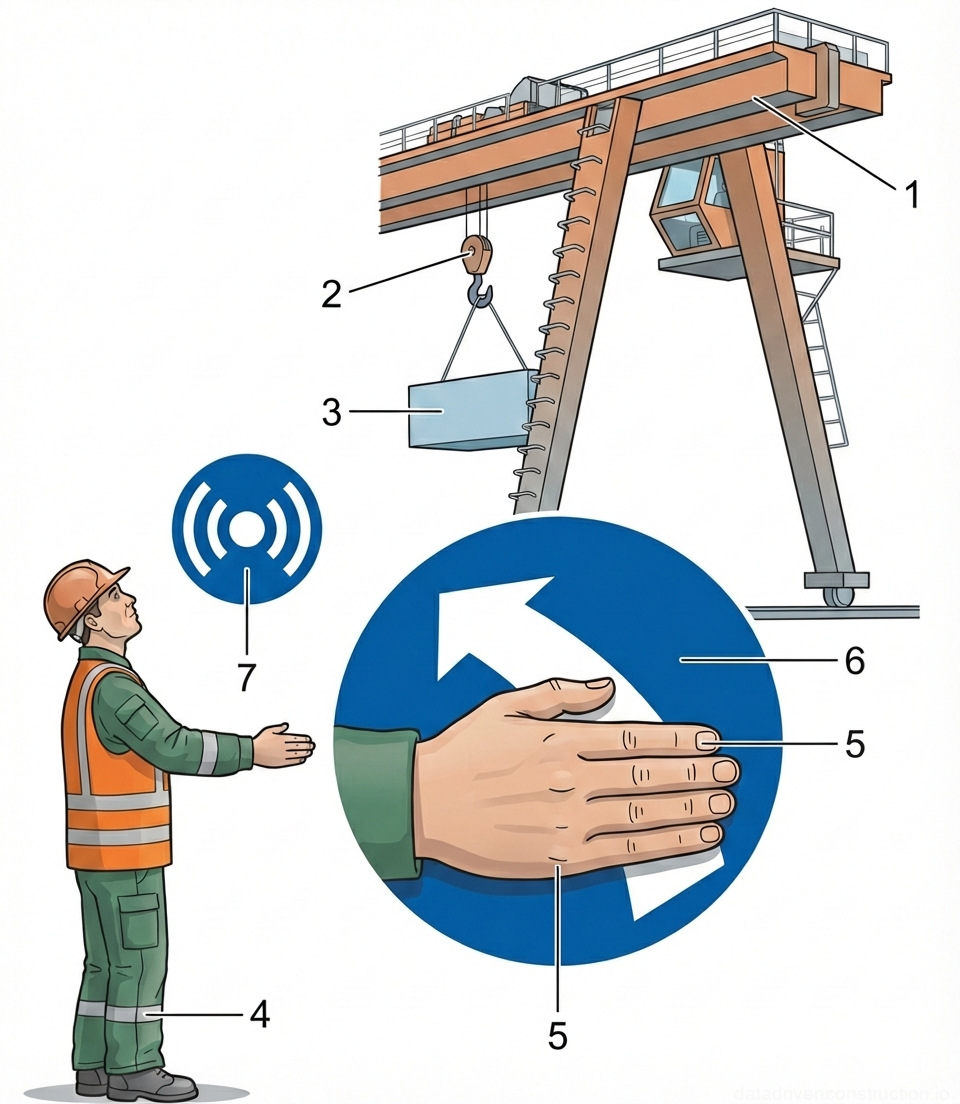
Fig. 18
Fig. 18 — Fig. 18
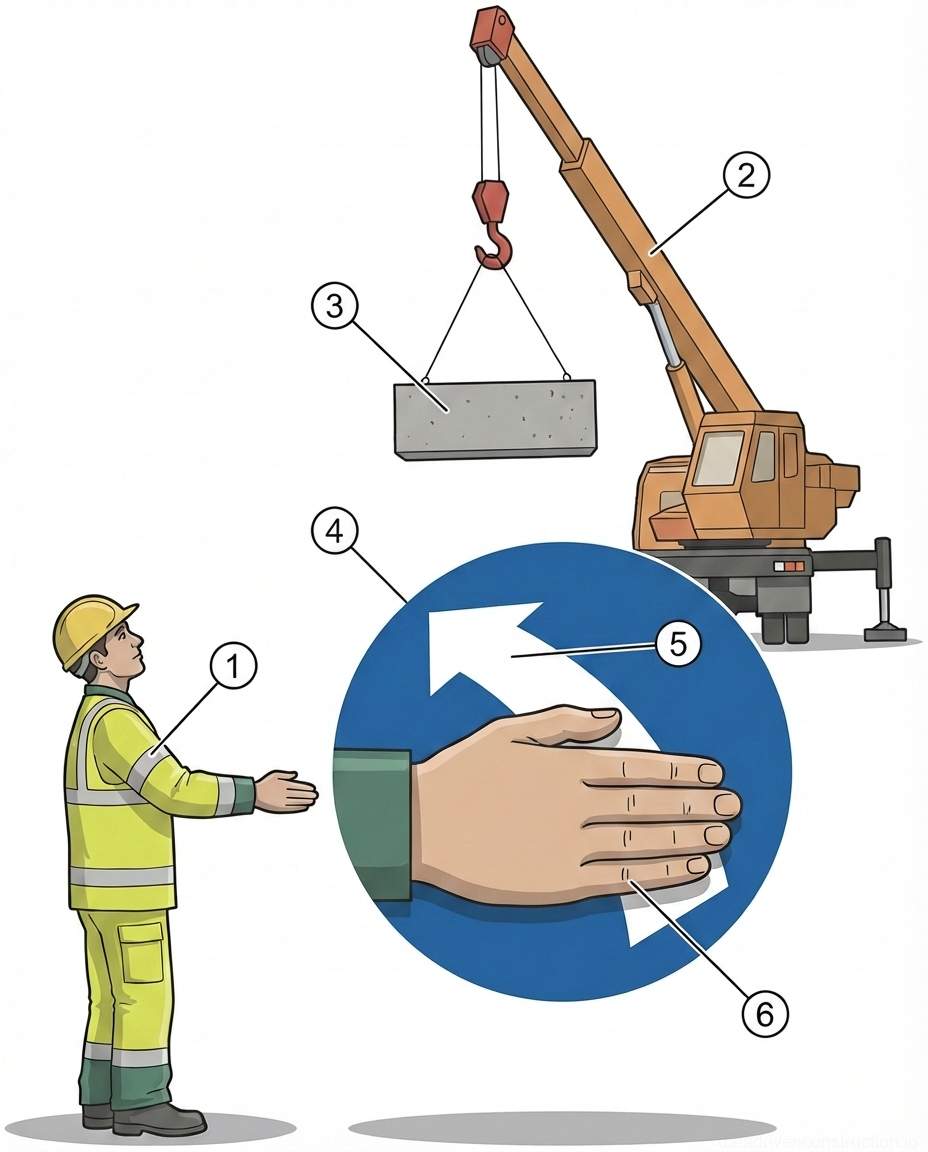
Fig. 1 — Standardized visual communication protocol and hand signal execution for mobile crane lifting operations
Fig. 19 — Standardized visual communication protocol and hand signal execution for mobile crane lifting operations
1Qualified signaller (banksman) equipped with high-visibility Class 3 safety apparel and hard hat, positioned in the crane operator's clear line of sight to control lifting operations
2Mobile hydraulic crane with extended telescopic boom and deployed outriggers, executing the lifting operation according to the signaller's visual commands
3Suspended load consisting of a precast reinforced concrete element, rigged with a multi-leg wire rope sling assembly attached to the primary crane hook
4Magnified detail view inset isolating and highlighting the standardized hand signal protocol used for clear visual communication on noisy construction sites
5Curved directional motion arrow specifying the lateral sweep of the arm, indicating the intended direction of the crane superstructure's slewing maneuver
6Signaller's extended hand with open palm, performing the standardized dynamic gesture to command specific crane maneuvering and boom rotation
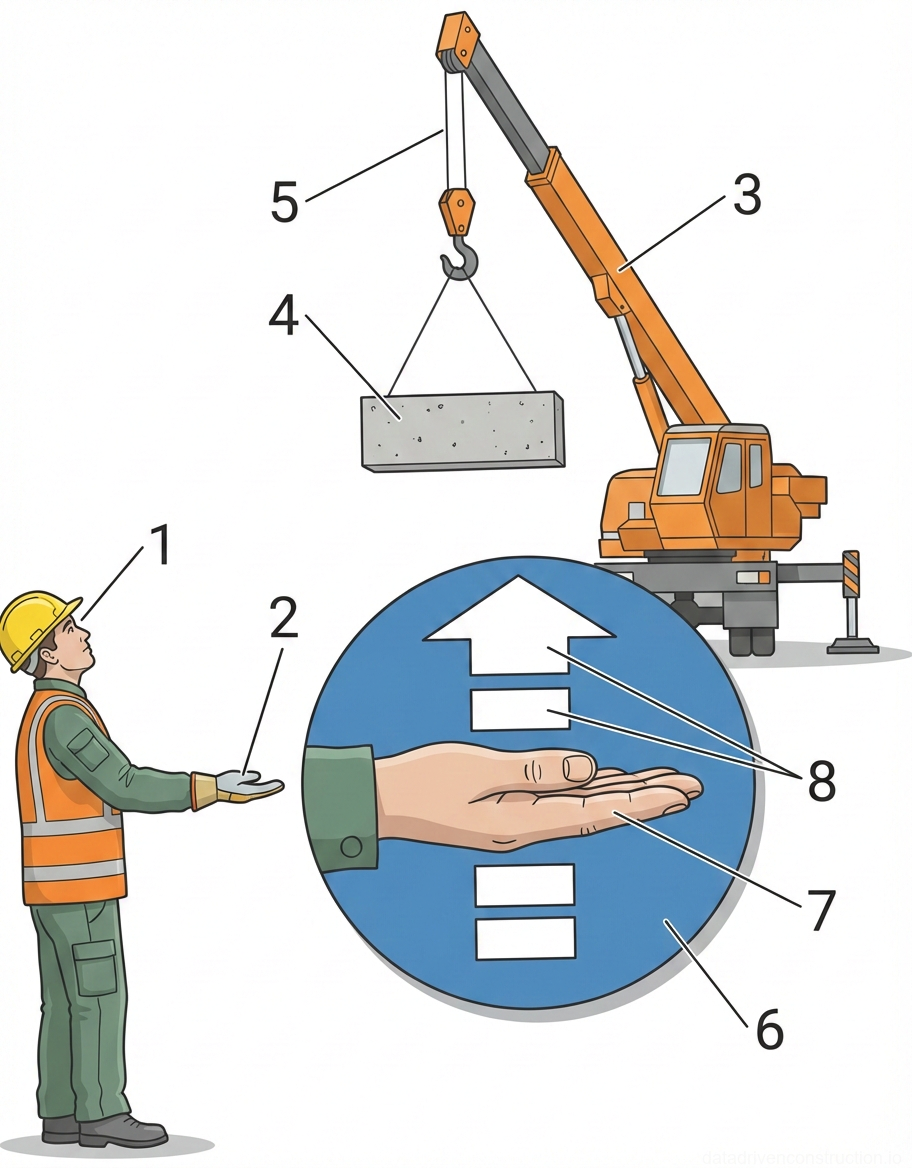
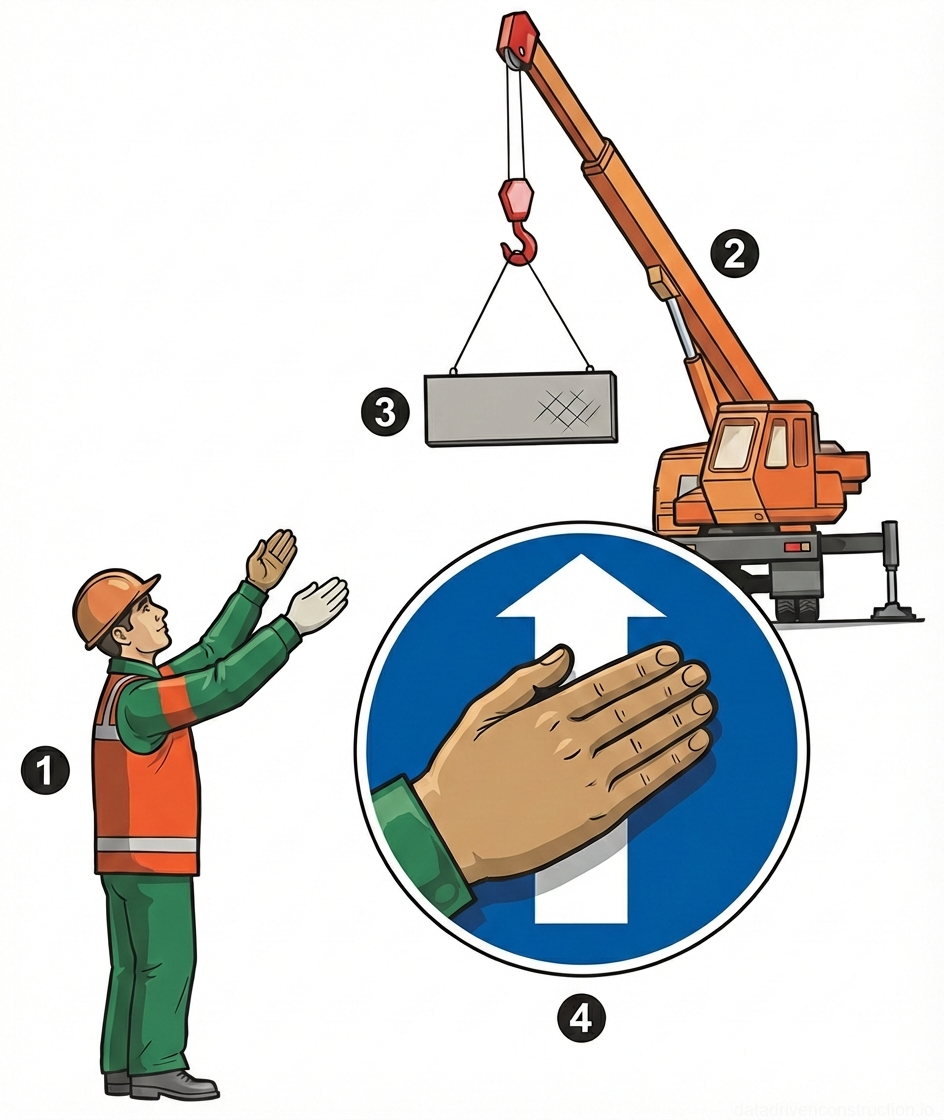
Fig. 1 — Standard hand signal for hoisting operations in construction lifting
Fig. 20 — Standard hand signal for hoisting operations in construction lifting
1Slinger/Rigger — construction worker equipped with high-visibility vest and hard hat, positioned to clearly direct the crane operator
2Mobile Crane — truck-mounted lifting equipment with an extended telescopic boom and hook block for hoisting materials
3Suspended Load — rectangular structural element or material bundle, secured by rigging slings to the crane hook
4Hand Signal Detail ('Hoist/Raise') — close-up of the required gesture showing the palm facing upward and moving in an upward direction, indicated by the white arrow
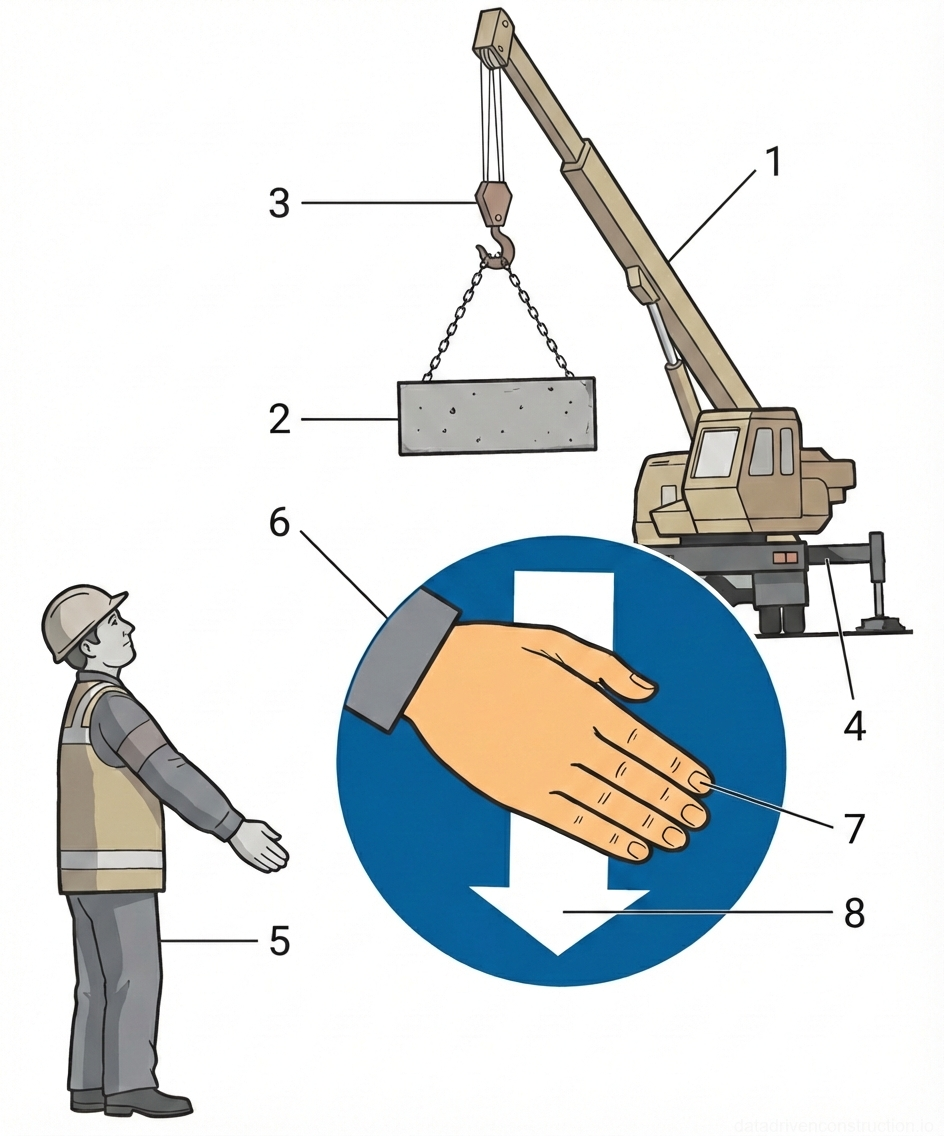
Fig. 1 — Standard crane hand signal for 'Lower Load' demonstrating operator and banksman interaction
Fig. 21 — Standard crane hand signal for 'Lower Load' demonstrating operator and banksman interaction
1Telescopic boom of a mobile crane, extending to position the load
2Precast concrete block or suspended load, secured by a lifting sling and chains
3Crane hook and pulley assembly, connecting the lifting rope to the load
4Outrigger stabilizer, deployed to provide a wide, stable base for crane operation
5Banksman or rigger, wearing high-visibility clothing and a hard hat, directing the crane operator
6Circular inset detailing the specific hand signal gesture for clear communication
7Right hand extended downward with palm facing down, indicating the direction of movement
8Downward directional arrow, emphasizing the motion to lower the hook or load
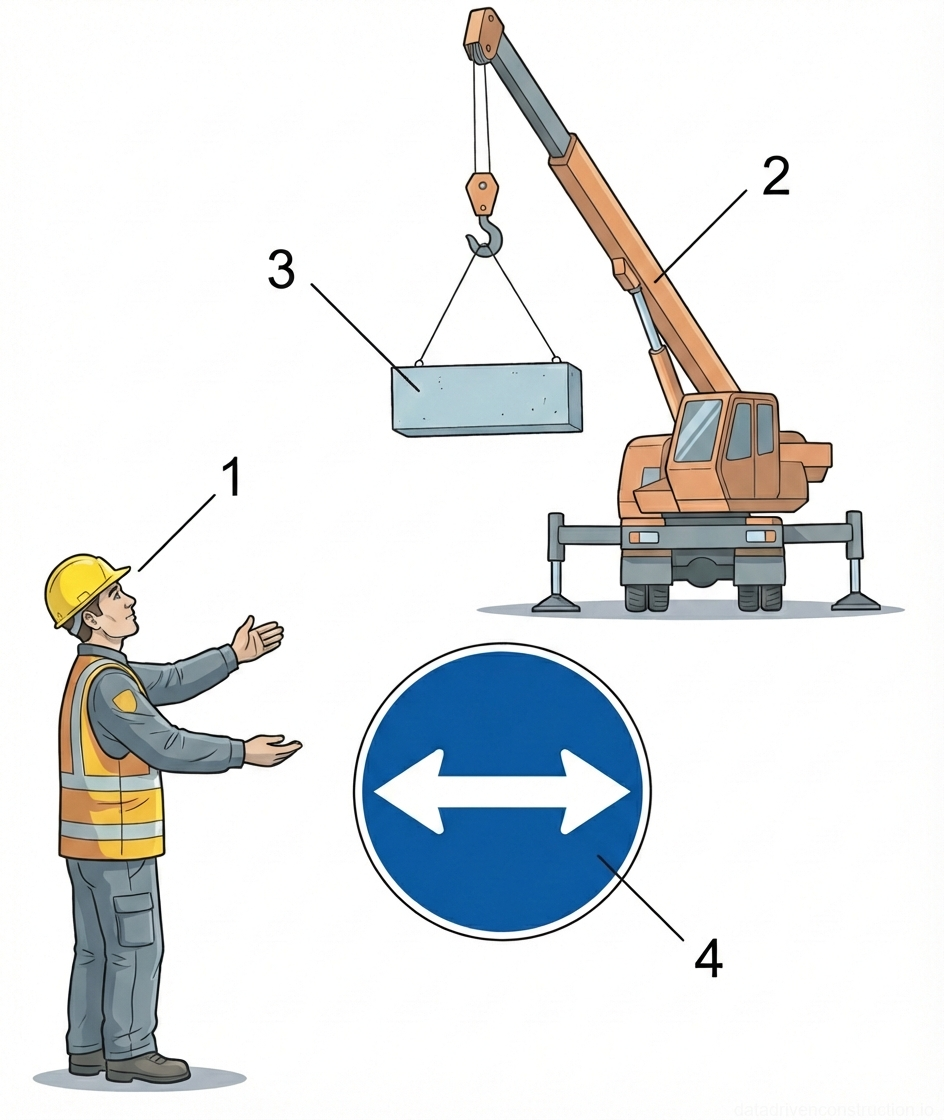
Fig. 1 — Standard hand signal for crane operation: 'Move carriage' or 'Move boom horizontally'
Fig. 22 — Standard hand signal for crane operation: 'Move carriage' or 'Move boom horizontally'
1Slinger/Rigger — Qualified personnel equipped with high-visibility personal protective equipment (PPE) including a hard hat and reflective vest, responsible for signaling the crane operator.
2Mobile Crane — Heavy machinery used for lifting and moving heavy loads, featuring an extendable boom and outriggers for stability during operation.
3Suspended Load — A precast concrete block or similar heavy object being maneuvered by the crane under the direction of the slinger.
4Hand Signal Graphic — Visual representation of the specific command indicating horizontal movement, characterized by an extended arm with the palm facing down and moving in the desired direction.
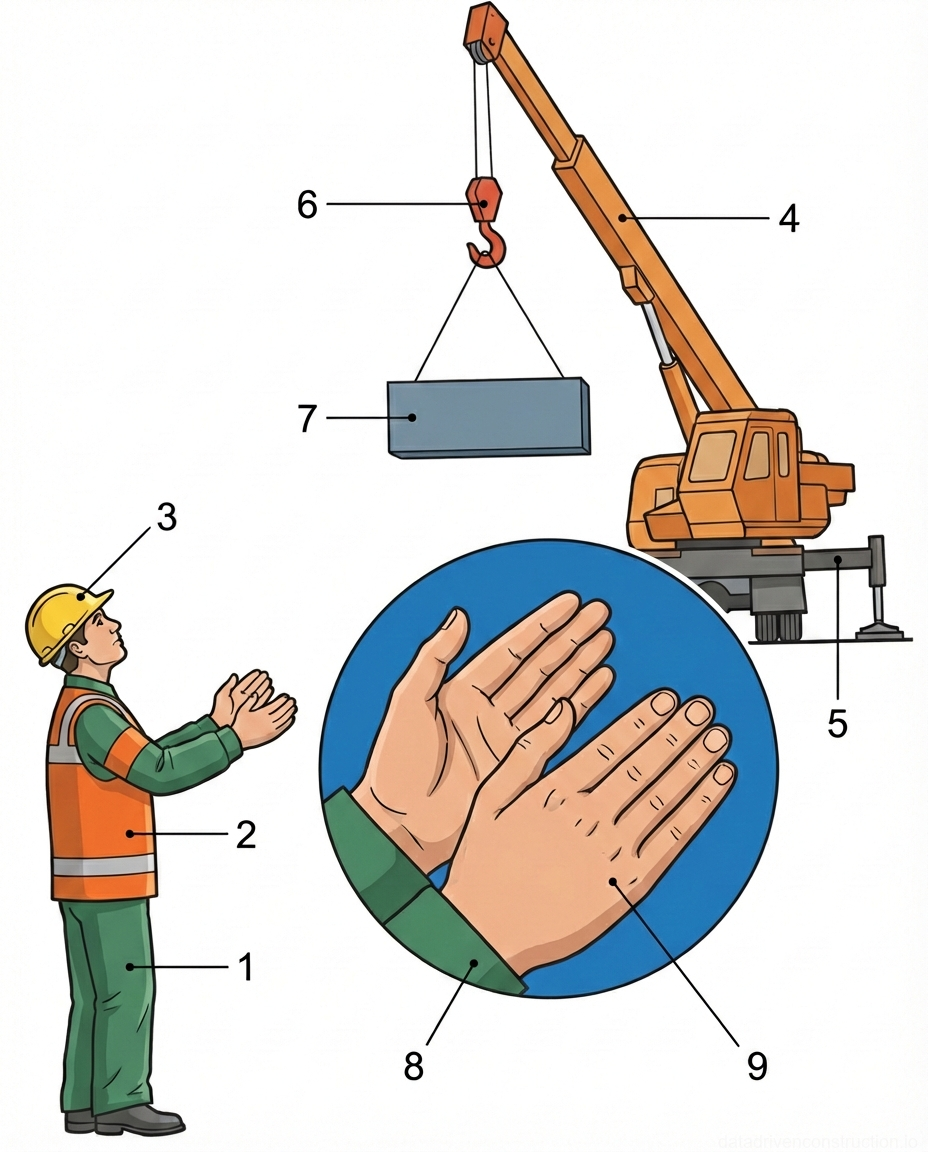
Fig. 1 — Standard crane hand signal for 'Stop' operation showing signal person and mobile crane interaction
Fig. 23 — Standard crane hand signal for 'Stop' operation showing signal person and mobile crane interaction
1Work trousers, part of standard personal protective equipment (PPE) uniform, providing full leg coverage
2High-visibility safety vest (Class 2 or 3) with reflective striping, worn over standard workwear to ensure the signal person is clearly visible to the crane operator
3Hard hat (safety helmet), compliant with safety standards (e.g., ANSI Z89.1 or EN 397), providing head protection against falling objects
4Telescopic boom of a mobile crane, extending to lift and position the load, constructed of high-strength structural steel
5Hydraulic outrigger of the mobile crane, extended and deployed on an outrigger pad to provide stability and distribute the crane's load during lifting operations
6Crane hook block assembly, including sheaves and a safety latch, suspended from the boom via wire rope for attaching lifting slings
7Suspended load (e.g., concrete block or equipment), currently being handled by the crane, rigged with wire rope or synthetic slings
8Signal person's sleeve, showing standard workwear uniform
9Hands positioned open and palms facing forward, the standard visual hand signal directing the crane operator to 'Stop' or hold the current position of the load
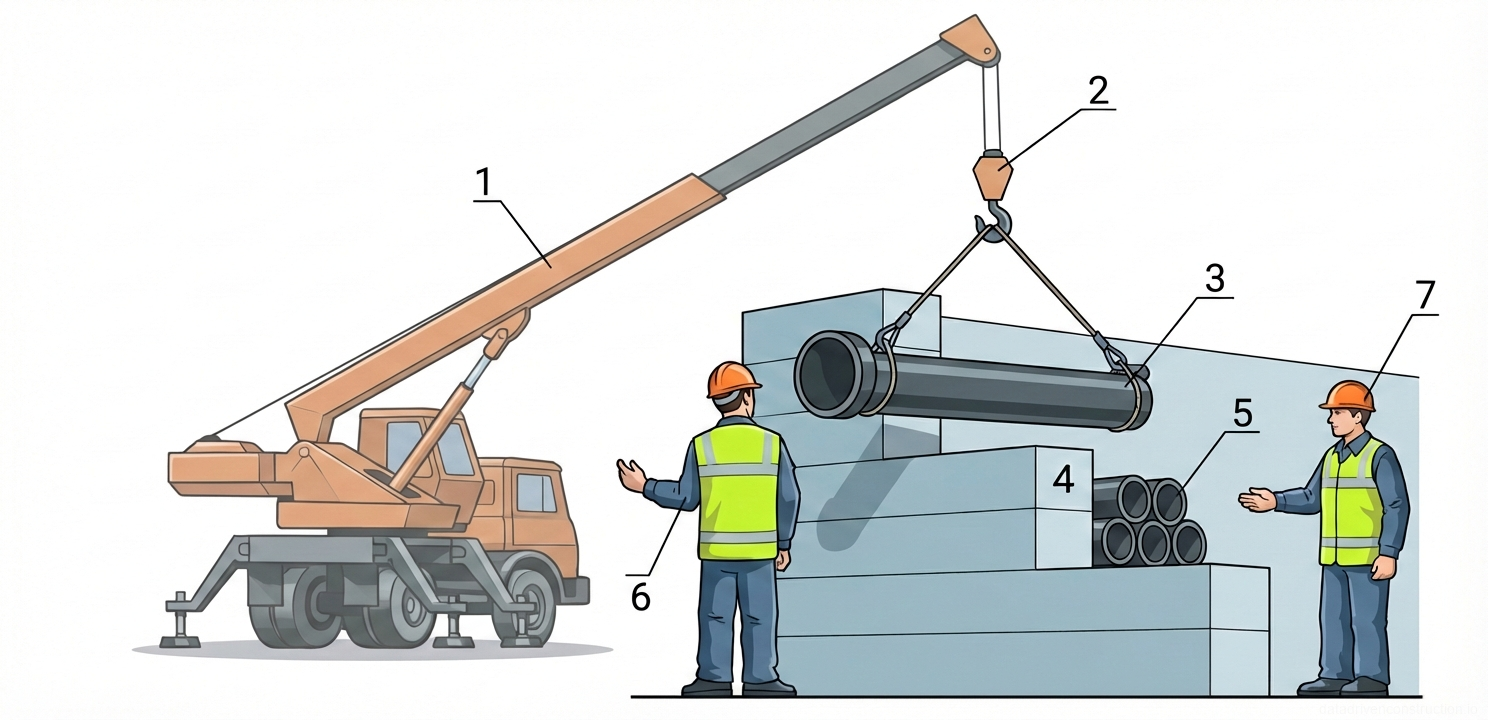
Fig. 1 — Diagram of mobile crane lifting operations, detailing the hoisting and staging of pipe sections over a precast concrete retaining structure
Fig. 24 — Diagram of mobile crane lifting operations, detailing the hoisting and staging of pipe sections over a precast concrete retaining structure
1Telescopic boom of a mobile truck crane, constructed from high-strength structural steel, extended to provide the required lifting height and radius
2Heavy-duty crane hook block assembly with a safety latch, forged steel, serving as the primary attachment point between the hoist wire rope and rigging
3Rigging sling assembly (wire rope or synthetic web), wrapped securely around the load to maintain balance and prevent slippage during aerial movement
4Stepped precast concrete block structure, functioning as a sturdy retaining wall and segregation barrier for the material storage bay
5Stockpile of cylindrical utility pipes, staged horizontally in a designated storage area behind the concrete barrier awaiting installation
6Qualified signal person wearing high-visibility safety apparel and hard hat, positioned to direct the crane operator using standardized hand signals
7Rigger or site worker in standard PPE, positioned safely outside the direct drop zone to visually monitor and guide the final placement of the load
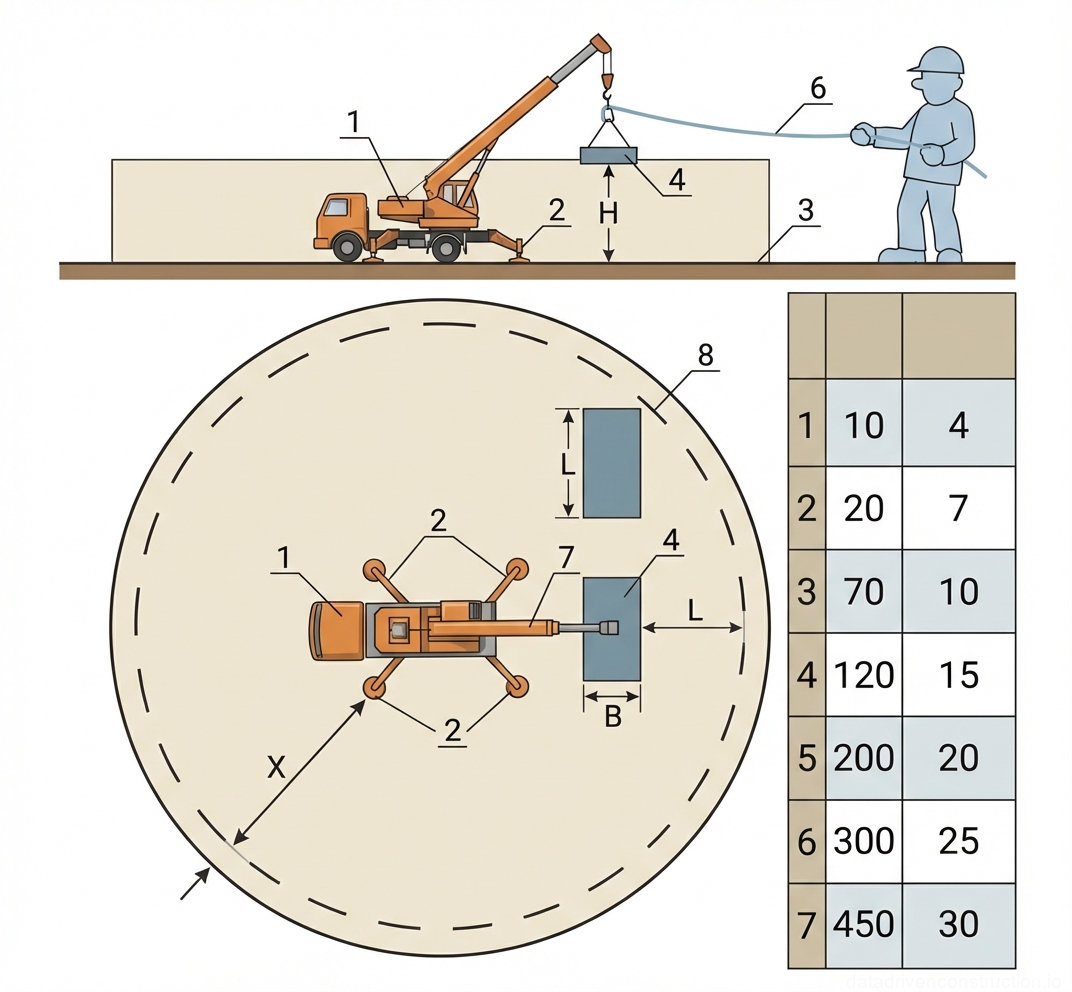
Fig. 1 — Diagram for determining the danger zone during lifting operations with a mobile crane, including correlation table for lift height and safety distance
Fig. 25 — Diagram for determining the danger zone during lifting operations with a mobile crane, including correlation table for lift height and safety distance
1Mobile truck crane used for lifting operations, positioned with outriggers deployed for stability
2Outriggers (stabilizers) of the mobile crane, extended to the ground to ensure operational stability and prevent tipping
3Ground level or operational surface where the crane and worker are situated
4Suspended load being lifted by the crane, with minimal dimension 'B' and maximum dimension 'L'
6Tag line (guide rope) held by a worker to control the rotation and swing of the suspended load during lifting
7Telescopic boom of the mobile crane, extended to position the load over the designated area
8Boundary of the danger zone, indicated by a dashed line, representing the minimal safety distance (X) calculated from the center of rotation
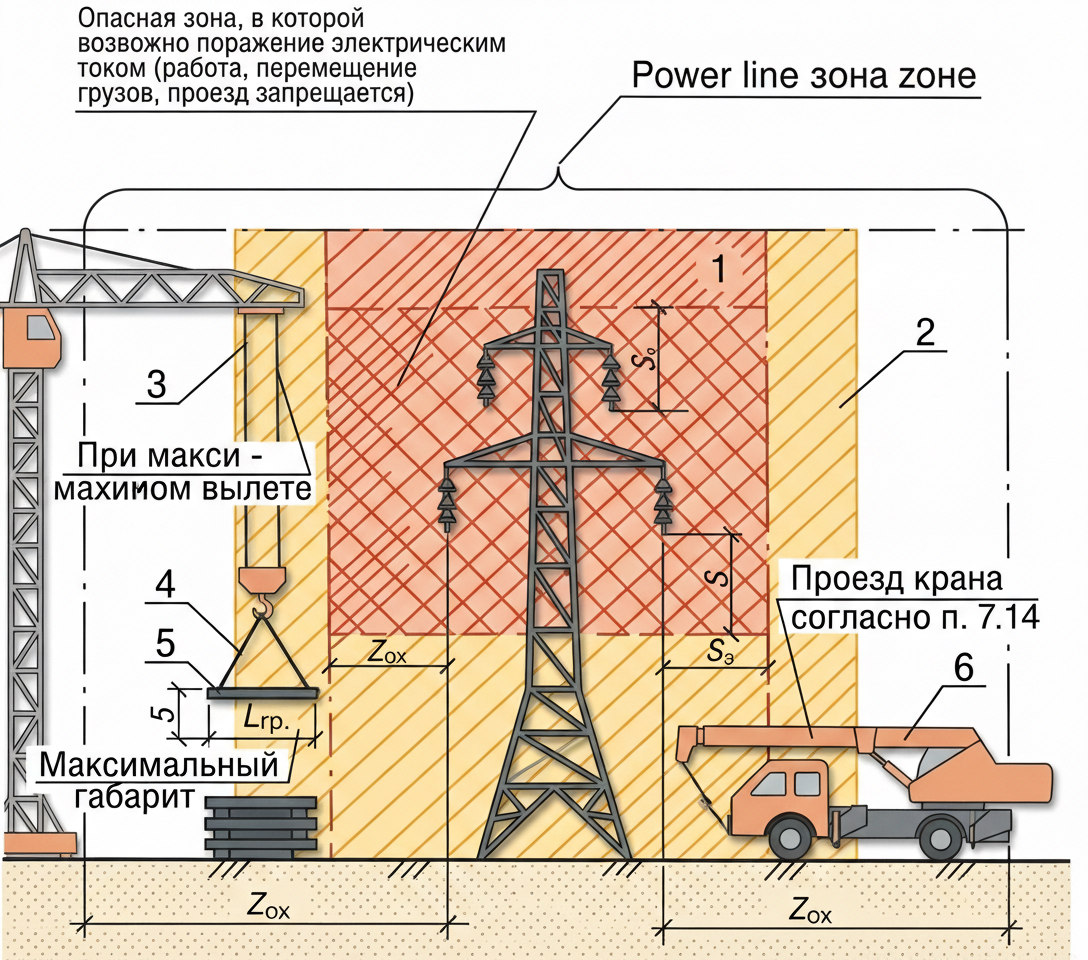
Fig. 1 — Safety zones and operational clearances for crane operations near overhead power transmission lines
Fig. 26 — Safety zones and operational clearances for crane operations near overhead power transmission lines
1Danger zone (cross-hatched red area) — Restricted zone where there is a risk of electric shock; lifting operations, load movement, and passage are strictly prohibited within this area.
2Overhead Power Line (OHL) protection zone (yellow hatched area) — Defined boundary extending a specified distance ($Z_{ox}$) outward from the outermost conductors to ensure safe clearance for adjacent activities.
3Crane hoist rope — Steel wire rope extending vertically from the crane boom at its maximum reach, carrying the lifting hook and load.
4Load lifting sling — Multi-leg rigging equipment connecting the crane hook to the suspended load for secure hoisting.
5Suspended load — Construction material or component being lifted, positioned outside the danger zone boundary ($Z_{ox}$) with a specified maximum dimension ($L_{rp}$).
6Mobile truck crane — Vehicle positioned for transit or operation outside the danger zone, with passage clearances dictated by safety regulations (e.g., clause 7.14).
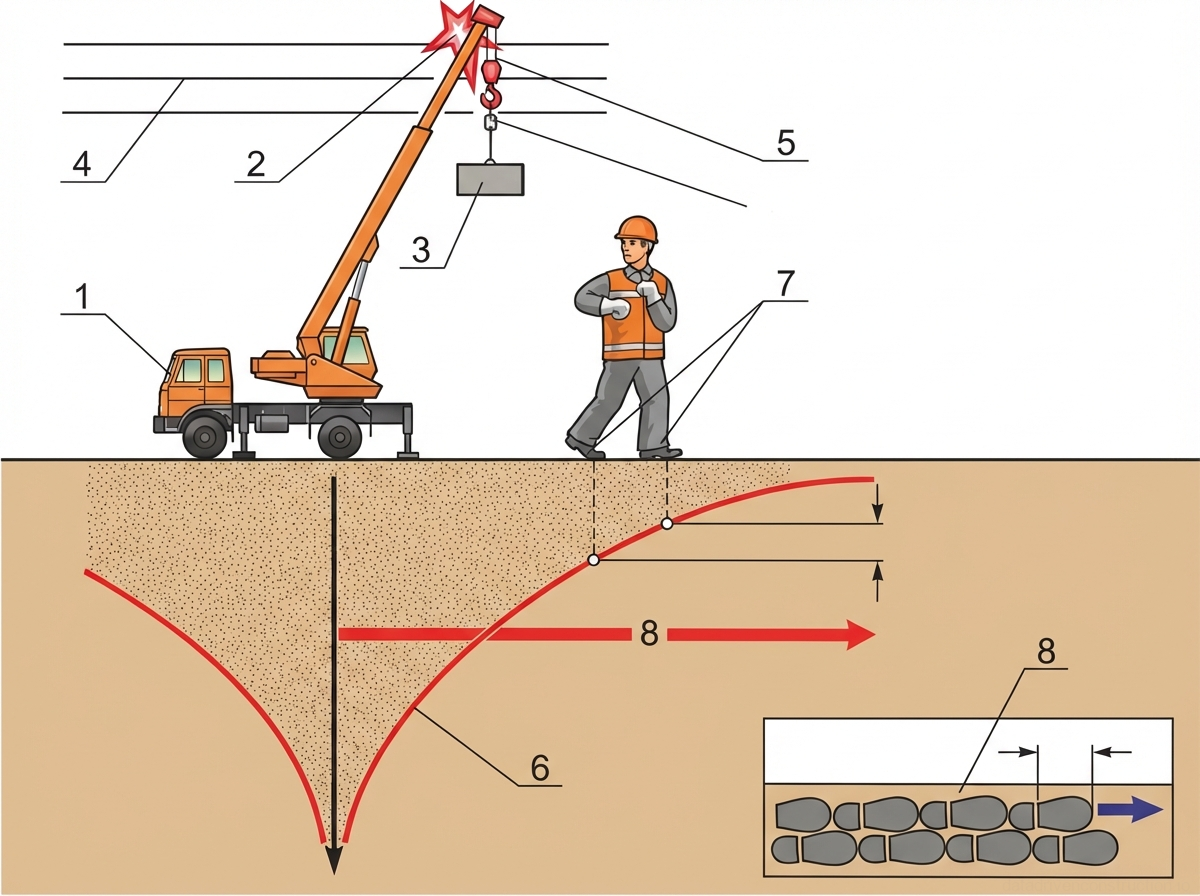
Fig. 1 — Ground potential gradient and step voltage hazard dynamics during accidental crane contact with high-voltage overhead lines
Fig. 27 — Ground potential gradient and step voltage hazard dynamics during accidental crane contact with high-voltage overhead lines
1Mobile truck crane chassis, inadvertently acting as a conductive path to ground for the fault current.
2Telescopic crane boom, serving as the point of physical and electrical contact with the energized conductor.
3Suspended material load attached to the crane lifting mechanism.
4Overhead high-voltage power transmission lines.
5Point of electrical fault / arc flash where the boom breaches the clearance distance of the power line.
6Ground potential gradient curve, illustrating the hyperbolic distribution and dissipation of surface voltage radiating from the grounding point.
7Points on the gradient curve corresponding to a worker's standard stride, creating a lethal step voltage (U_step) potential difference between the feet.
8Indication of the minimum 8-meter safe evacuation radius and the required 'shuffle-step' (heel-to-toe) walking technique to eliminate step potential.
Tips & Recommendations
i
To minimize 'thermal bridges' and improve the thermal efficiency of the building, the joint thickness when using polymer-cement adhesive must be strictly maintained within the range of 1-3 mm using an 8x8 mm notched trowel.
!
It is strictly forbidden to perform masonry works without providing a technological gap (up to 5 cm) between the working deck of the scaffolds and the wall being erected, to prevent deformation of the fresh masonry due to scaffold vibrations.
i
When installing a wooden batter board for setting out the axes, the upper edge of the guide boards (30-40 mm thick) must be aligned strictly in the horizontal plane using an optical level to eliminate cumulative geodetic errors.
!
The supporting metal trusses of the hinged scaffolds, when transitioning to the third working tier (deck height 2.05 m), require mandatory rigid fixation with shackle brackets immediately after their gravity-induced straightening.